Paris and Beyond

Our Personal Tour de France & Other Exciting Adventures!

Our French Kitchen

20120715-230014.jpg

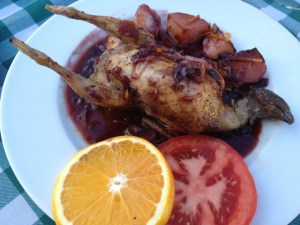
Foie Gras stuffed Quail

Even though we have our hearts and minds set on moving to France, we don’t really consider ourselves Francophiles. However, we do love many things about the French, in particular, their cuisine. So one of the things we really enjoy doing is cooking up a French meal together.

In the past 20 years, my husband has become somewhat of a gourmet chef. Suddenly thrust into the task of cooking for a family including two children ages 7 and 12 at the beginning of our relationship (since I didn’t really know how to cook), he found himself in the position of introducing them to a wider variety of foods. The youngest, being an especially picky eater, was quite a challenge, but now all these years later he has benefitted from a gradual exposure to many different foods and is happy to eat almost anything as long as it doesn’t have olives or mushrooms in it.

Ten years ago, when we became empty nesters, we found ourselves free of any “dietary restrictions” and living in a place where we could find just about any ingredient. So our interest in various cuisines grew. We have spent hours and hours being inspired by Julia Childs and our favorite French chef, Jacques Pépin, on TV and have purchased all of their books. At this point, my husband has honed to perfection his ability create an amazing dinner even without a recipe. Some of our favorites are his Herbes de Provençe Roasted Chicken, Foie Gras stuffed Quail, Duck a la Provençal, Eggs Cocotte, Pork Tenderloin Medallions in muscat wine and grapes, Lamb Chops with Persillade, plus a variety of gratins such as potato and cauliflower. He also prepares both savory and sweet soufflés and bakes several kinds of French breads. Though I generally serve as prep chef, I have finally improved my own culinary skills to a certain degree. I even have a speciality of my own, the Salade Niçoise, which my husband often requests. You might wonder how we eat this rich and heavy food without gaining lots of weight. Well, we don’t eat it every day and, like the French, when we do, we eat small portions and try to take our time. Eating slowly and putting your fork down between bites, which seems to come naturally to the French, is a challenge for Americans, but we’re working on it.

When we traveled throughout France two years ago, we stayed in a variety of gîtes (small, rural vacation homes), bed and breakfasts, and apartments. In every one of these places we encountered two items that we eventually realized seem to be French kitchen essentials — an electric teapot and a salad spinner — not what you might have guessed. Contrary to how you might perceive French cuisine as complicated and fussy, the French have learned to keep their kitchens simple and efficient. Further evidence of this is seen in the fact that cupboards are sparse or sometimes non-existent which is something that Americans cannot comprehend. I have found this to be true in much of my research on French homes for sale. Old and new alike, it is not uncommon to see a kitchen with very little storage space. However, things are changing little by little and from time to time you see a listing that advertises “mod-cons” — modern conveniences, specifically full-size (referred to as American) appliances and lots of cupboards. While I’m not opposed to this change in standards, I hope they don’t get too carried away in following our example of material gluttony. Keep in mind, that the average French home is much smaller than ours. Fortunately, we have learned to live quite happily with our 1389 American square feet, so the transition to a French residence won’t be so difficult for us. Nevertheless, we can’t deny that kitchen design and amenities are on the top of our priority list when searching French properties and planning for our ideal French kitchen.
Our French Classroom

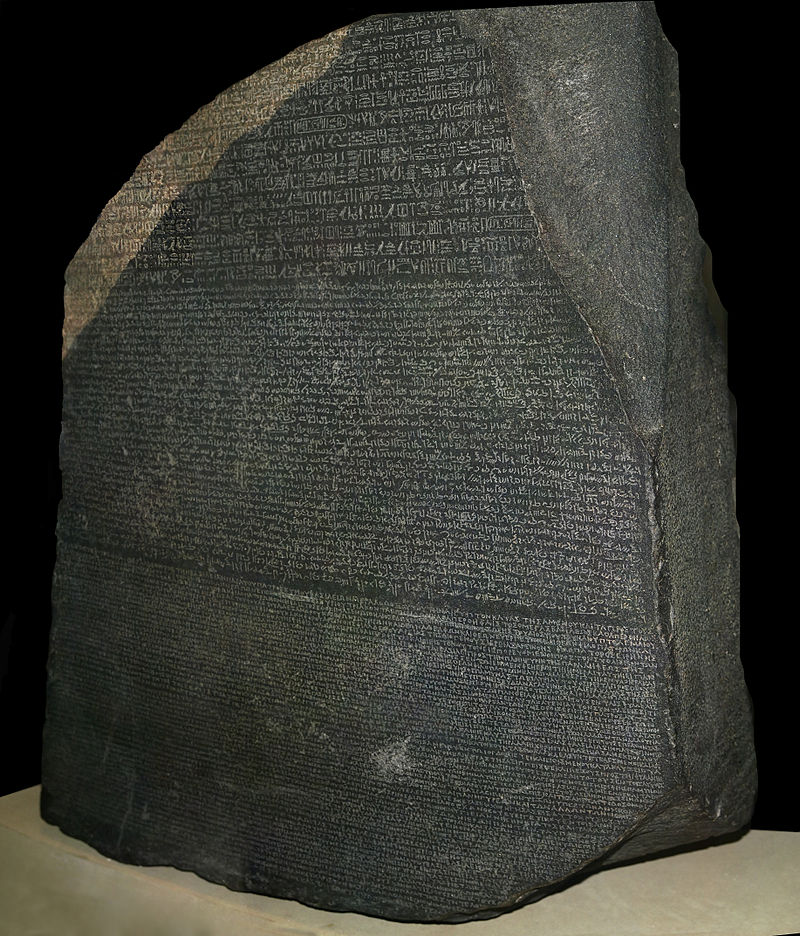
Rosetta_Stone

Rosetta Stone

What are you passionate about? That seems to be a popular question these days. Well, if I had to answer that, I would have to say that I have been passionate about language learning all my life… starting with English. Grammar totally clicked with me from a very early age. In 6th grade when it was time to choose an elective for my transition to 7th grade in Junior High, my teacher recommended that I take Spanish over Home Economics. Little did she know that this choice would direct the course of my life. Long story short, I spent many years studying the Spanish language, immersed both through family and friends in the Hispanic culture, and employed as a teacher in a variety of positions that required me to speak Spanish. Along the way, I studied French and Portuguese as well. But as the saying goes, if you don’t use it, you lose it. So, as we look ahead to a future life in France, it’s back to the books.

There are without a doubt many ways to study a foreign language from traditional rote memorization to complete immersion. Memorization was always my strong suit. I am great with lists of vocabulary and grammar rules so borrowing the French teacher’s textbook is a good tool for me. However, I am well aware that while this method yielded endless good grades back in the day when I first began to study Spanish, it does not produce a fluent speaker. With less time and more wisdom, I am inclined to take a slightly different approach in order to achieve my goal of being able to speak at least some passable French on our next trip. As an introvert this is a challenge. My husband is more of an extrovert and happy to let the French he is relearning roll off his tongue in what sounds like a most authentic way. He jumps right in and isn’t afraid to make the effort to speak, but grammar is not his forte. In the end, we make a great team because we can build on each others’ strengths.

Over these past few months, we have combined our previous knowledge and experience with language learning to put together the most useful and productive resources possible that incorporate a variety of techniques. We know it’s really important to include reading, writing, speaking and listening exercises in our study. Technology has greatly enhanced this process. So here’s what our French classroom looks like… For immersion, we invested in Rosetta Stone, a sequenced language learning software program centered on learning patterns rather than memorization. The Duolingo app makes the perfect mobile classroom interface and we love to use it when we are out and about relaxing at our favorite coffee house. The website FluentU provides a wide range of video-based lessons. We’ve even returned to an old resource, French in Action, an outstanding television series produced in the 80’s which is now available free online. For more traditional study and reference, the French 1 textbook, Bien Dit!, comes in handy. Online or as an app, Quizlet flashcards and study games serve as additional practice and reinforcement. Along the way, we take notes in the Evernote and Penultimate apps. Finally, we access LanguageGuide.Org when we need further explanation of certain concepts. Most importantly, we try to use the skills we are learning by messaging or speaking to each other in French at least a little bit every day.

Parlez vous Français?

“Do you speak English?” or slightly better, “Parlez vous anglais?,” you might be inclined to ask as soon as you step foot on French soil and you will find that many French people do speak English — more than ever before. However,Parle Francais consider the impression you want to make. Americans are notorious for expecting everyone around the world to speak English… one of the many characteristics of “Ugly American” behavior. Maybe you’re on vacation and you aren’t going to be there long so you figure you’ll survive by depending on those French citizens who speak English. And perhaps your attitude is that they should be lucky you chose to spend your hard-earned vacation dollars in their country. These days even the French need tourists to boost their economy.

The French, especially in Paris, have a reputation for being rude. I have never found that to be true when I made at least a small effort to speak French. Consider how you feel when you’re trying to do business at home and you encounter someone who doesn’t speak English or doesn’t speak it very well. It might even be someone who has lived here for a very long time. First off, given that most Americans are not motivated to learn a second language nor does the education system mandate it, it’s very unlikely you will be able to communicate with this person in his native tongue. Secondly, you probably think to yourself — he’s here, he should speak English! Well, guess what? That’s what people think about Americans when they travel around the world — you’re here, you should speak our language!

Like I said, the smallest effort can make a big difference. In France, a simple “Bonjour” upon entering a business establishment and “Merci. Au revoir.” upon leaving will go a long way in opening the lines of communication and contributing to a positive experience for both parties. Most people are familiar with these phrases already. You can easily pick up a few more using a French phrase book or one of many free apps like 24/7 French Tutor, Mindsnacks French, or SpeakEasy French where you can listen to and practice pronunciation.

If you’re thinking about actually moving to another country, then learning the native language as best you can is a must. In France, many, many people speak at least some basic English nowadays. On our 2012 Tour, we found this to be true throughout the country from large cities to small villages. In addition, there are many English-speaking expats, particularly British, with whom you can communicate. But what’s the point of moving to a new country if you remain within that comfortable circle? You might as well stay home. The whole idea is to have a different experience. Granted, it’s not going to be an easy or fast process to learn a new language. It will take a lot of dedication, effort, and time, but, in the end, it will be worthwhile. Wouldn’t it be fun to at least exchange a few pleasantries with your new French neighbors and conduct your shopping at the marché, boulangerie, pâtisserie, and charcuterie in French? You will end up feeling very isolated if you never try to get out of your comfort zone and assimilate on some level. Learning the language of your newly adopted country is just the beginning. It will naturally lead to learning about the culture which will help you understand the people, and, eventually, you will start to feel at home.

This is the approach we are taking and we’re very excited about it. More about our resources and our methods for learning French in the next post. Until then… Au revoir et merci beaucoup pour lire notre blog.

Location, Location, Location

Le Carte

La Carte

As I mentioned previously, in considering our move to France, it is very important to us that we live in a place where we can thrive and not merely exist for this last adventurous chapter of our lives. Once you have decided to move, you need to figure out where exactly you want to live. Personally, I have had a lot of experience with moving and readjusting to a new place. Due to my dad’s line of work, I grew up with a life of moving almost every year until I reached high school. As an adult, I’ve moved a few more times by choice. My husband, Norman, grew up living in the same place all the way through college until he went off to grad school. After that, he racked up his share of moving experience including living in Japan for a year. So, we’re pretty well-equipped for this aspect of our adventure.

Choosing the right place to live is the key and dependent on several factors like weather, cost of living, and access to transportation. We love the climate where we currently live with its moderate temperatures and cool afternoon ocean breezes. There are a few hot and cold days during the year but nothing too drastic. So, it’s our goal to find an area in France with similar weather. With a simple Google query, I was able to identify some resources to guide me in my search. ExpatsBlog provided “Ten of the Best Places to Live in France for Expats“. On ExpatsForum, I found “The Top Five Regions in France Where Expats are Moving To“. After reading these and several other sources, I learned that Southwestern France was most likely to be the place that felt like home. Then I turned to sites like WeatherBase and Météo-France, the French national weather site, in order to find specific information about year-round weather averages for the cities and towns in Southwestern France that seemed to be probable choices and compared the stats to our own area. That’s how I finally zeroed in on two of the 22 diverse regions in France — Aquitaine and Poitou-Charentes.

The next step was to buy some detailed maps of these regions. Even though I know how to navigate Google maps very well, I still prefer being able to see “the big picture” on a large scale paper map. I bought two maps, one for each region, and mounted them each on large sheets of cardboard I picked up at Costco. I studied them carefully starting with the larger, more recognizable city names and then focusing on smaller towns and cities marking chosen places with post-it arrows. We plan to purchase a car but don’t want to depend on it for all our transportation needs so I also referenced a map of TGV (Train à Grande Vitesse) lines. The TGV is France’s high-speed train running an average of 120mph which was originally developed in the 70’s for service between Paris and Lyon but has now expanded to include many other destinations. We wanted to make sure we focused on areas that would be a reasonable distance to a major train station so we can easily travel throughout the country and take advantage of the French public transportation system, one of the densest networks in the world.

Based on all this information and previous experience with some of the locations, I chose a variety of cities, small towns, villages, and country locations for our first research trip next summer. Check out Tour 2015 for a list of these locations and a map showing our planned route. After 8 weeks, we expect to come away with more specific ideas about the areas and types of places where we would like to live so we will be able to narrow the search for our future home in France.

All Things Considered… Pt. 2

After housing, next on the list of considerations for moving to another country is healthcare. This is our second largest expense and one that I have pharmaciebeen fortunate to have fully covered for most of my 37-year career in education. While I will receive a small stipend toward insurance costs for myself upon retirement should I choose to continue with the policy my employer currently provides, it will not cover the majority of the cost and my husband, though eligible for Medicare by then which will be somewhat beneficial, will not be covered at all. We’ve all heard how wonderful the French healthcare system is. In fact, it is ranked the #1 healthcare system in the world, but we had to investigate how it might work for us as American expats.

One of the requirements in applying for a Long-Term Stay Visa for your move to France is to show proof of insurance so you have to start out with a policy you have purchased in the U.S., preferably one that will ensure coverage overseas. However, once you settle in France, you can begin applying for the Carte Vitale (healthcare card) which will allow you to participate in the French public healthcare system either through the Assurance Maladie (if you are employed and paying taxes) or the Couverature Maladie Universelle (if you are retired) — real universal healthcare coverage! While it is touted to be a lengthy process full of red tape, you can keep all receipts accrued during this time period as reimbursement will be retroactive to the date of your application. Once you possess this card, it will be invaluable. You will produce it for any hospital, doctor, pharmacy, or lab expense, pay in full up front (keeping in mind that the costs for all of these services are regulated and, thus, far less expensive than in the U.S.), submit receipts, and receive reimbursement deposited directly into your French bank account about two weeks later. The cost of this insurance is based on your reported income at a rate of 8% which, for us, would work out to about one-third of the cost of our current coverage in the U.S. In addition, most people in France purchase an inexpensive supplemental policy to cover the majority of expenses not reimbursed by the primary insurance. In any case, if you have an emergency, you can simply go to the nearest emergency room. Regardless of your status, you will be taken care of without proof of insurance or payment before you are treated. From an American point of view, this is truly amazing.

Here are a couple of comparisons that may interest you. In 2011, the cost of a visit to your family physician in France was €24 ($32) as opposed to $104 in the U.S. A more extensive perspective is provided in this recent post by Tom, French husband of American blogger, Diane, of Oui in France who had an eye-opening experience while visiting his wife’s family in the U.S.  The difference between American and French healthcare is shocking!

By moving to France, we can eliminate the cost of housing by paying cash for a house (see All Things Considered Pt. 1) and drastically reduce our healthcare costs. This would put us in the position of recuperating almost all of our monthly retirement income instead of spending over half of it on these two major items. So why isn’t everyone doing this? Well, like I said, it’s no easy feat. You have to dedicate yourself to all aspects of this endeavor, plan in advance with plenty of time, and, most of all, be ready and willing for the adventure of your life… and WE ARE!


All Things Considered… Pt. 1

Just a little château s’il vous plaît

I am fully aware that moving one’s life to another country is no easy feat. There are so many aspects of this endeavor to investigate and flesh out before you embark on this journey.

So, what things should you consider first? Let’s start with housing

First and foremost for us, we needed to find out how viable it would be to buy a house in France and pay for it in full from the sale of our own home so we could eliminate our biggest expense, our mortgage. Unlike many people at our stage of life, we don’t live in a house that we’ve owned forever and is almost paid for. We are, however, in a good position to sell our home, recuperate our initial investment which was substantial, and even possibly make a few dollars. This would give us the means to invest in a new home upon retiring, but where exactly do we want to live?

Like any country, housing prices in France vary depending on the the area and there are 21 very diverse regions in France. I started by looking at property per square meter comparisons for various regions which I found on Expatica.com. We live in a 1400 sq. ft. (130 sq. m.) townhouse, small by American standards though quite spacious for the two of us, but large by French and even most European standards for that matter. Based on the current market value of our home and its square footage, it’s worth about $4,000 per square meter. Whereas, prices in Aquitaine where we are interested in living run about $2700 per square meter. This led us to the conclusion that we could easily afford to pay cash for a house of similar caliber in France though we may have to downsize a bit. Fortunately, it is more important to us to live in a place where we enjoy the cultural opportunities, weather, and our surroundings than to have a large house so that will be easy for us… we’ve done it before.

Next, I set off in search of some reliable French real estate sites that would give me an idea of the quantity and quality of available properties. There are many to choose from such as France Property Shop, Allez Français, and French Property Links. Of course, I will have to sort these out later in the game, but a fairly thorough cross-reference search revealed plenty of homes available in the condition, size, and price range that would work for us. I even contacted one real estate agent (agent immobilier) to make sure a particular house I was interested in actually existed and was still for sale. He was kind enough to respond and confirm that is was, but did not take our relationship any further once he realized we were not immediately ready to buy which was understandable.

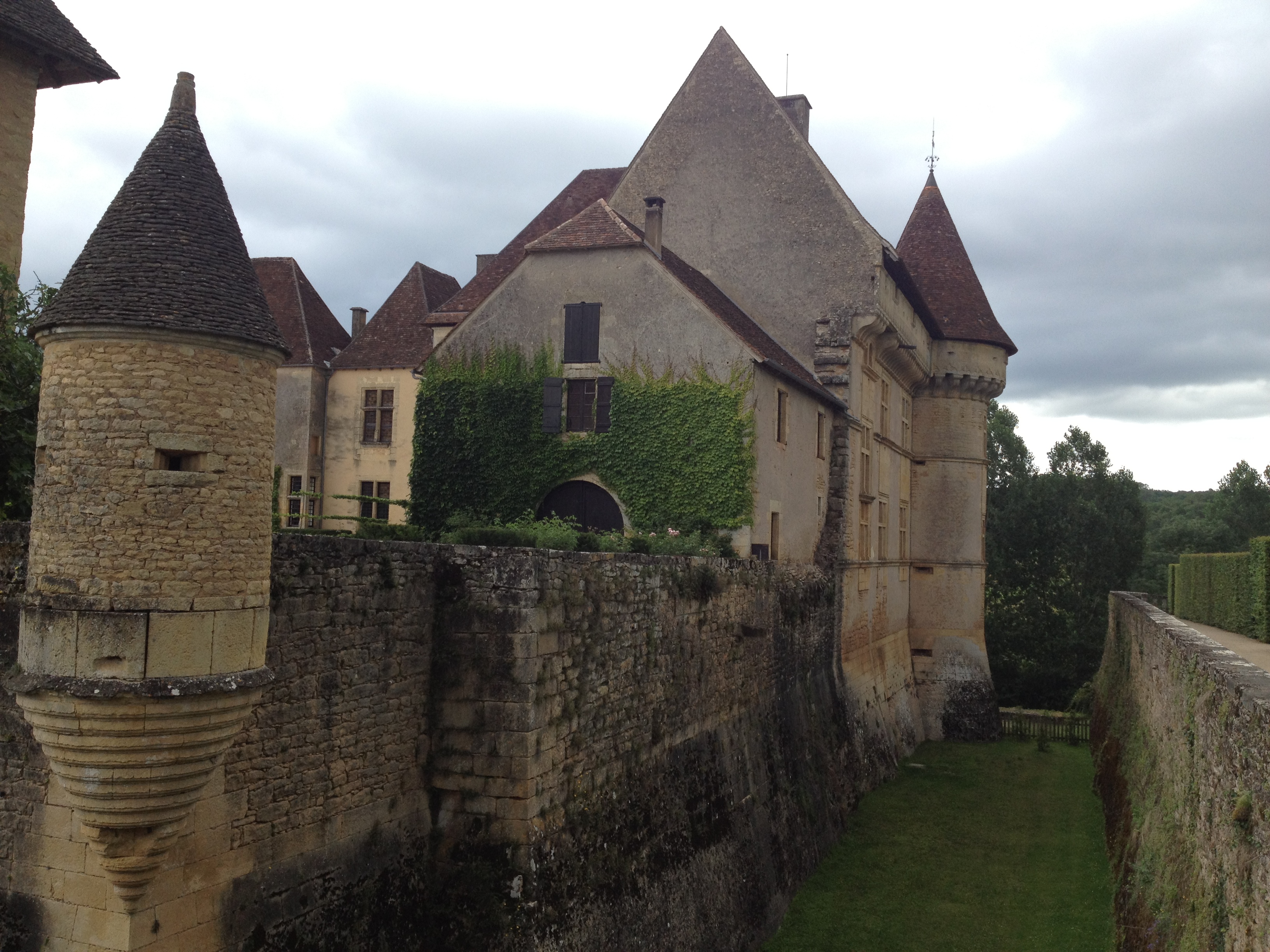
The major advantage for us in attempting to buy property in France is that we will be able to pay cash. Currently, France is suffering its own economic challenges and mortgages are almost impossible to obtain. For example, one amazing property where we will be staying next summer, La Manoir La Betoulle, includes a 5,000 sq. ft. manor house, two gîtes (cottages), a large swimming pool, tennis courts, much land, and other amenities. The British couple who has been running it very successfully as a B & B for the past ten years has had it up for sale for the last two years. They have received several offers but no one has been able to get a loan. The asking price… €795,000 (about $1 million) — a steal from our point of view in the Silicon Valley and there are plenty of people here who could write a check for that amount. Of course, we’re not looking for anything like that, but the same is true for smaller properties. Sellers need to find buyers who have cash and, since that is the plan for our next purchase, this situation will totally benefit us. We understand that purchasing a home in France is a much different experience and process than it is here in the U.S. We’ll be educating ourselves on that and I’ll be writing more about that later. I have found a variety of really good resources on this topic. You might want to check out a couple for yourself… France Buying Guide and Expatica.com. And, if you’d like a little further reading about the home buying experience in France, read Diane’s enlightening and humorous post on her blog, Oui in France.

As one French proverb goes… A chaque oiseau, son nid est beau — To every bird, its own nest is beautiful. We are looking forward to finding our own special nest in France.

Stay tuned for Part 2 of “All Things Considered”.

On our way back…


Today, in conjunction with the 101st Tour de France Grand Départ, we are launchingimage our next adventure through France.

One of the goals of our 2012 Tour de France was to become familiar with many regions of France — the real France outside of Paris. As the French say, there is Paris and then there’s the rest of France — Paris is not France. Our 7-week experience proved this to be delightfully true and you can read all about it starting with our first blog post “Getting the Adventure Rolling“.

Another goal of our trip was to decide how well our fantasy of retiring in France fit with our reality. We have had this idea in mind for most of the 20 years we have been together. So what did we decide? At the end of any long trip, no matter how well-planned, one is usually pretty tired and ready to return home. It’s not a good time to make any life-changing decisions. At that moment, our conclusion was that we weren’t ready to commit to spending our retirement in France. You can read more about our self-reflection in Norman’s post “Looking into the Mirror“. However, as retirement draws near and becomes more concrete, we have begun to revisit this idea. This year, after considering several factors, the idea has taken life once again and this time, much more seriously. Our reality is that housing and healthcare alone will make a rather large dent in my anticipated retirement. Residing in one of the most expensive areas in the United States as we do, makes the possibility of greatly reducing our cost of living by moving to another country, even France, quite real.

So, for starters, over the next two summers we’re planning two extensive expeditions to the areas in France we think would be the most compatible for us. Based on our previous travels and much research, we have decided to return to Western France — specifically the region of Aquitaine with its renown cities of Bordeaux and Périgueux and slightly north into the region of Poitou-Charentes with its famous cities of Angoulême and Cognac. Two important factors in these choices… The climate in these locations is similar to that of our own here in the U.S. though somewhat wetter and cooler. There is a wide variety of available housing in a price range that fits our budget. Our plan is to experience both city and country living in various locations from a resident’s rather than a tourist’s point of view.

That said, we’re on our way back to France on June 12, 2015. If you’ve ever thought about moving to another country, or simply enjoy the experience of traveling vicariously, we invite you to join us and come along for the ride. Over the next year, our weekly posts will cover topics such as things to consider before you decide where you want to live, what it takes to become an expat, and learning the local language as well as French food, fashion, and culture. Check out Tour 2015 to discover our destinations where you will be able to follow us daily once D(eparture)-day arrives.

Too Many Words! …Or Not Enough?

After visiting a good number of museums and historical sights throughout France, we made an interesting observation. Once we got past the Louvre, the Orsay, and a couple of the other big name visual arts places where the artifacts on display could pretty much speak for themselves, we noticed that the displays in other museums were heavily focused on words — attempting to tell and explain rather than show all about prehistoric life, some period of French history, or even, a genre of art or literature. It prompted me to think of the adage, “Show, Don’t Tell” that we often use to direct students in writing or creating an engaging presentation. We encourage them to use all their senses to help the audience experience their story. And, indeed, that’s what people love… to hear and truly experience a good story. Well, at least I think that’s true for Americans. I’m not so sure about the French.

Americans nowadays have very little patience for a lengthy dissertation on any topic and perhaps that’s the fault of the media. However, I don’t think that this visually stimulating world in which live is such a bad thing. It might be acceptable to admit that it’s progress. While touring France, we would often enter a museum and after passing through a few galleries that bombarded us with placards of explanations larger than the artifacts, I would sigh and say, “Ah, too many words!” And Norman would nod in agreement. He pointed out that one thing Americans know how to do well is put on a show. Though I had never really thought about this in comparison to the rest of the world, I realized that it’s true. We know how to tell a story and make it come to life whether real or imaginary. Think Hollywood, Disneyland, Fourth of July Fireworks Shows, Olympic Ceremonies, Presidential Inaugurations, weddings, funerals, the first day of school… the list goes on. Everything large or small has a story behind it and becomes a production either personal or public.

I’ve never been a big fan of reading all the museum curators’ detailed analyses of artwork, but it’s even worse when you are looking at… arrowheads, hundreds of them! Really! Case in Point #1, the newly designed and built National Prehistoric Museum in the Dordogne. From its description online and in brochures, it sounds like an intriguing museum not to be missed. On display are 18,000 pieces from its collection of 300,000 objects. Imagine! This is daunting and impressive at the same time. When you arrive, you soon discover that the majority of the items on display are bones and arrowheads all very neatly lined up in long glass cases. A 10-minute video re-enactment of early man using his tools plays repeatedly on multiple screens throughout the museum. And the rest… words, words, and more words.

The French don’t seem to mind this approach. Case in Point #2, the Musée Marmottan in Paris. We were excited to visit this museum as it houses the largest collection of Monet paintings anywhere. We were not disappointed. In fact, there were so many works on display that it was almost difficult to view them from any appreciable distance. Nevertheless, it was stunning to see so much of Monet’s work. As we made our way downstairs to an additional temporary exhibit of the work of Berthe Morisot, one of the few female members of the Impressionist movement, I noticed that a crowd of people had gathered on the intermediary landing in front of a wall… of words! The entire 12-foot high wall was filled from top to bottom with a written chronology of the artist’s life and work. It was the same information that could be found on the brochure you received when you purchased your ticket. I could understand some people wanting to stop and read it, but one man was meticulously copying it down into a small notebook word for word. On the way back up, I observed a woman doing the same thing. I’m sure they were French. Why were they doing this?

Perhaps this French obsession with words is simply a natural reaction to the dilemma they face in having so few words to express themselves. It’s difficult to get a clear count from any reliable authority on the official number of words in any given language. However, it is widely accepted that English has about half a million words while French has somewhere around 100,000. This necessitates creating multiple meanings for a large number of words as well as using groups of words for a single item for which there is no specific word. I wish I could give you some concrete examples as we ran into this constantly during our travels, but after three weeks back home, we can’t think of any which is slightly ironic and funny. This phenomenon is completely confusing to the novice French speaker. You think you have a few words and phrases under your belt only to discover them employed in a different, unrelated context. There are also many words that are spelled differently but pronounced exactly the same. Sometimes even native speakers had trouble understanding each other. It’s not like we don’t come across some of these same linguistic situations in English, but I could swear they are much more prevalent in French.

I suppose in the end it’s not the number of words you know or that exist, but how well you use them to communicate your ideas, thoughts, feelings, needs, and desires. I can vouch for the fact that you can get by with very few in a language you are still struggling to learn and understand. That’s the true beauty of travel when you open your mind and heart to experiencing a different people and culture. Everyone manages to make themselves understood and have a good time in the process. This summer, we had the maximum opportunity for this type of cultural exchange and we will cherish this once-in-a-lifetime journey through France for the rest of our lives.

AU REVOIR…

20120820-204336.jpg

Our Hay Barn in the Dordogne

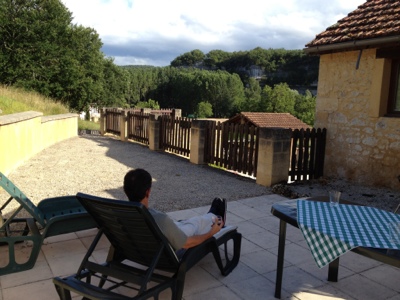
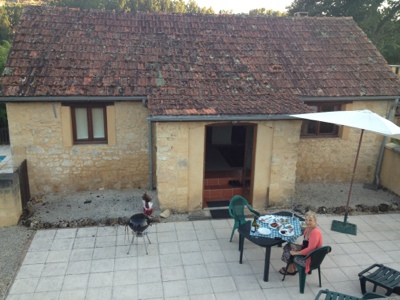
Accommodations: This was far and above our most favorite accommodation of the entire trip for so many reasons. The Hay Barn was one of four outbuildings belonging to a two story 19th century manor house that had been converted into a gîte. The current owners, Paul and Philippa, a British couple took it over a couple of years ago. The previous owner who made the original renovations had become too old and ill to maintain it. So when they purchased it, they had a lot of work to do and claim they are still working to improve the facility and, hopefully, see a profit. They live onsite when there is a space available and were there the week we stayed. They constantly checked with us and made sure every need was met. We found a bottle of local wine and a bowl of walnuts native to the area waiting for us upon arrival. Later in the week, we also received a generous sampling of Philippa’s homemade walnut cake.

20120819-180032.jpg

Theme:French country or perhaps, more specifically, Perigord countryside is the focus here along with its regional products including walnuts, foie gras, and truffles. Aside from the Hay Barn, the other accommodations are the Tobacco Barn, the Walnut Store, and the Roque Terrasse.

Pros: spacious with large living area and open kitchen (including gas stove which we prefer), carpeted floors (a welcome relief), lots of windows all around for great light and circulation, private outdoor terrace with BBQ, table, padded lounge chairs, and umbrella plus a swimming pool shared among the gîte guests. Oh, and lots of English TV channels so we were finally able to follow the Tour de France. Also, the location is perfect for exploring all those wonderful Perigord sites from the historic Roque St. Christophe right across the road to the famous Lascaux caves and every place in between. It is surrounded by prehistoric sites and endless grand castles and chateaus. The area is full of interesting and varied things to see and do. Twice we enjoyed the easy, convenient, and inexpensive opportunity to see the sights by canoeing down one of the main rivers.

Cons: Not too many significant cons. Parking is somewhat limited, the couch was rather mushy and kind of taxing on the back, and water was not consistently hot when needed.

Lessons Learned: The Perigord is our favorite region of France. If given the choice to return to only one of the destinations on our trip, this would be it.

Community: The Manoir des Granges, as the entire complex is known, is located about five minutes from Le Moustier, a tiny community with little to offer. However, down the road about 15 minutes is Montignac where we did the majority of our shopping quite conveniently. Daily farmer’s markets abound in all directions so there is plenty to choose from for your dinner table or picnic.

20120819-180048.jpg

Overall Rating: 👍👍👍👍👍 Nothing less than superior all around — the accommodations, our hosts, and the area itself. If you have never been here, you need to put the Perigord on your travel wish list. By the way, I should note that the Perigord is divided into four regions: Noir (black), Blanc (white), Pourpre (purple), and Vert (green). This gîte is located in Perigord Noir.

Link: Make sure to stay here: Le Manoir des Granges
Due to the additional availability of the large manor house, it is also an excellent venue for small weddings and several have been held here. Paul and Philippa are currently planning their daughter’s for next May. You may enjoy reading their blog as well which gives first hand knowledge of the area as well as specific impressions of their accommodations.
Le Manoir des Granges Blog

Take a look at the Dordogne page for more photos of the Hay Barn and the many sights we enjoyed during our stay.

Our Fisherman’s House in Bordeaux

20120814-224306.jpg

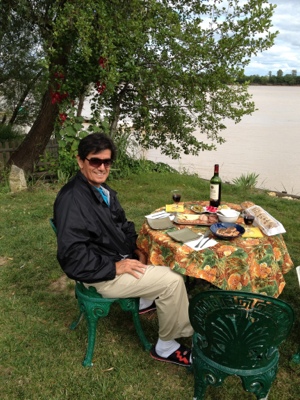
Accommodations: Our second gîte was located about 45 minutes northeast of Bordeaux. As soon as you leave this heavily populated metropolitan area referred to by some as a mini Paris, you head deep into lush, green wine country. Our “home away from home” for this week was a restored 18th century fisherman’s house overlooking the Dordogne River in the port village of Asques. The gîte was adjacent to an 18th century mansion occupied by owners Sylvie and Jacques. Sylvie, who also conveniently spoke English, met us and gave us a tour of the house with all the necessary details. We were welcomed with flowers from her garden on the table and an invitation to the evening’s classical music concert at the local church. This was by far the largest and most expensive of our accommodations — two stories — living and kitchen downstairs with spiral staircase leading to bedroom and bathroom upstairs — about 800 sq. ft.

Theme: Since it had been a fisherman’s house, this theme was tastefully carried through in many small details throughout. Think fish.

Pros: very well appointed with many furnishings and household items (just about anything you could imagine you might need), washer, very large drying rack, garden with outdoor table, seating, hammock, and BBQ (yes!!), garage, hardwood floors on second level, comfortable kingsize bed, LOTS of space, and, once again, location, location, location — easy drive to Bordeaux, St. Emilion, Libourne, and many, many wineries in every direction. Plus you are literally sitting on the bank of the famed Dordogne River. How cool is that?!

Cons: stone floors (no surprise), extremely small mini fridge, plenty of IKEA furniture some of which fell apart even with gentle use, isolated area — you have to travel every day if you want to do or buy something… however, this was the mid week of our vacation and we were ready to kick back. Since we had so much space to relax both indoors and out, it was not a big issue for us at the time but definitely a consideration for the future. The residents pretty much keep themselves closed in with their shutters and much of the time it felt like the village was empty so it was super quiet. Additionally, at $800/wk, this gîte was relatively expensive given its isolated location.

20120814-224015.jpg

Lessons Learned: Tiny communities can hold big surprises like the outstanding concert we experienced at the church. You never know what you are going to discover.

Community: Asques is a tiny port hamlet on the Dordogne (population 476) which is completely residential with no stores of any kind. Occasionally a boat comes in to the port with items for sale. We drove about 20 minutes to Jacques Cousteau’s birthplace of Saint-André-de-Cubzac for our groceries several times during the week.

Overall Rating: 👍👍👍👍 If it weren’t so isolated and the town had a few services to offer, we would probably give it a 5. We had a great experience though. It was perfect for us at the time.

Link: Check it out… La Maison du Pêcheur
See more pics on the Gironde page.

Post Navigation