Andalucía Pt. 1
Ever since the early 70’s when I studied Spanish history in college, I have wanted to visit two iconic Spanish landmarks, Granada’s Alhambra and Córdoba’s Mezquita-Cathedral. Both of these monuments can be found in the region of Andalucía, largest in area and second largest in population of the 17 Spanish autonomous communities. Stretching from Alpine slopes to the Mediterranean Sea, it offers a wide-range of geographical landscapes. Andalucía has the distinction of being Europe’s southernmost point and possessing one of the warmest climates. Currently, we are enjoying very hot but dry weather reminiscent of the many years spent living in the Coachella Valley near Palm Springs, California… thankfully, minus the sand. We are certainly getting our dose of vitamin D. Fortunately, we’ve had a lot of practice staying cool and comfortable in this kind of weather.
Eight centuries of Moorish influence on the Iberian Peninsula is most notable in Andalucía and that’s what makes it so attractive to me. The unique architecture with such attention to detail, design, and especially patterns are quite intriguing.
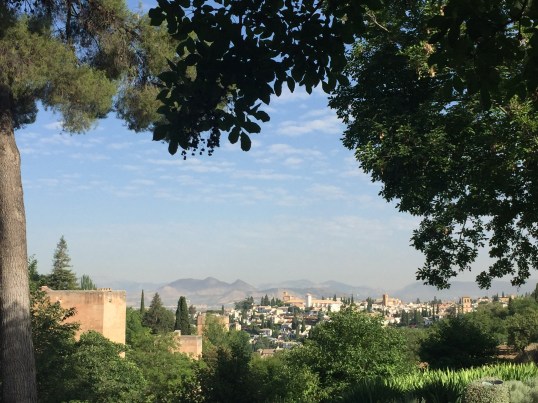
View of Granada from the Alhambra
We began with the Alhambra which spans a vast property on top of a hill in Granada. Like many monuments in this region, it has gone through several architectural transformations over the centuries leaving behind remnants of each. It served as the palace of the Muslim rulers until the Christian Monarchs took over in the 13th century. Later it housed the royal court of the Reyes Católicos (Catholic Monarchs), Fernando and Isabela who received Columbus here and set him off on his legendary exploration of the Americas from an Andalusian port in 1492. Charles V, King of Spain and Holy Roman Emperor, attempted to make his home here in the early 16th century by constructing a separate renaissance palace but never completed the project.
There is so much to see that it’s impossible to take it all in at once. We focused on the three Nasrid palaces which belonged to the last Muslim rulers.
I have always been fascinated by patterns and symmetry. When I taught elementary school, I used M.C. Escher’s tessellations in my math instruction. My students and I were captivated by them. It was interesting to learn that Escher’s visit to the Alhambra in 1922 inspired his work in this field. There is a certain mathematical classification of two-dimensional repetitive patterns based on symmetry referred to as “wallpaper groups”. Remarkably, evidence of all the 17 possible arrangements exists in the Alhambra tiles. Much of our knowledge in math and science can be attributed to ancient Islamic scholars.
If you are familiar with The Legend of Sleepy Hollow, you might be interested to know that author Washington Irving wrote a collection of essays, verbal sketches, and stories titled Tales of the Alhambra. Irving lived in the Alhambra palace while writing the book and was instrumental in introducing the site to Western audiences.


 Saffron has long been the world’s most expensive spice by weight. It’s important to get the real deal as there are many imitations and products of lesser quality. Saffron is produced in India and Iran, but the very best comes from the La Mancha region in Spain which we were excited to find for half the price of our usual source, Trader Joe’s. We’re hoping to purchase a larger amount to take home.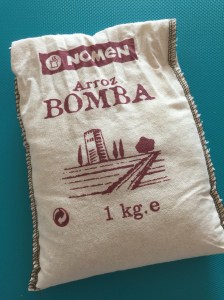
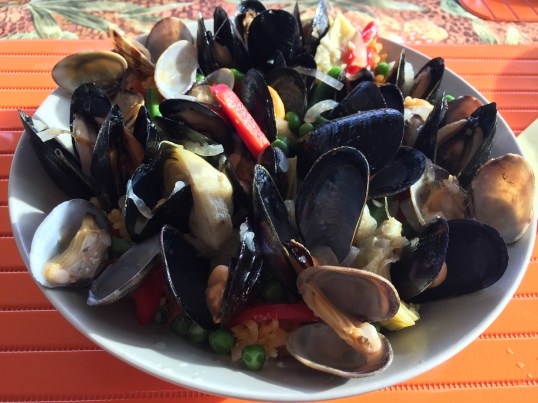


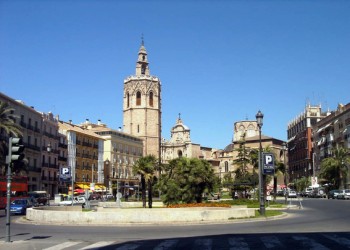

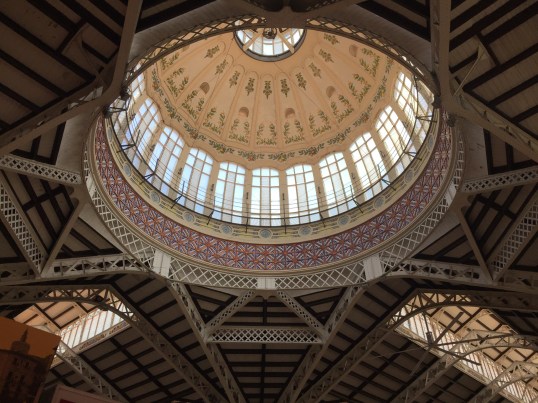
 La Ciudad de las Artes y las Ciencias (The City of Arts and Sciences) is a futuristic complex of buildings constructed on the former Turia riverbed between 1991 and 2006. The goal was to create an attraction that would draw tourists to Valencia year round. The complex includes a science museum, a planetarium, an aquarium, an opera house, and several other modernistic architectural structures spread over a vast area making it impossible to cover in just one day. So we chose our favorite and headed to the Oceanogràfic, the largest marine park in Europe.


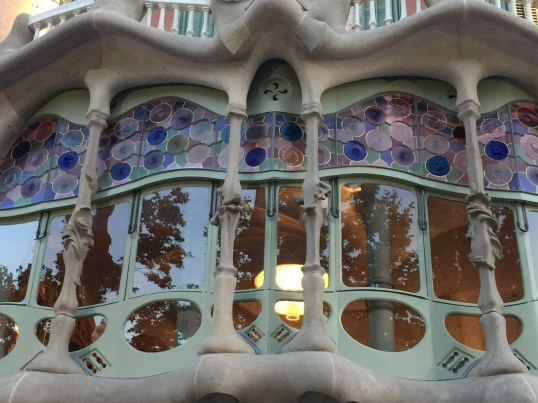

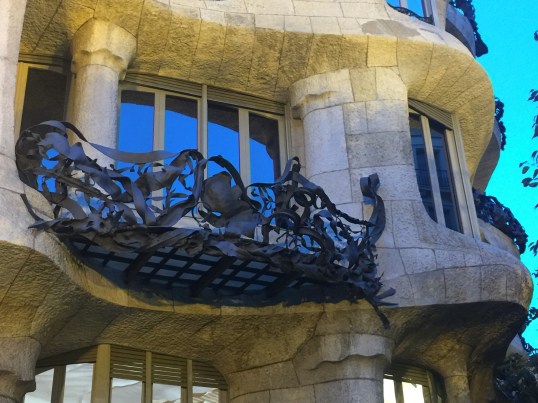
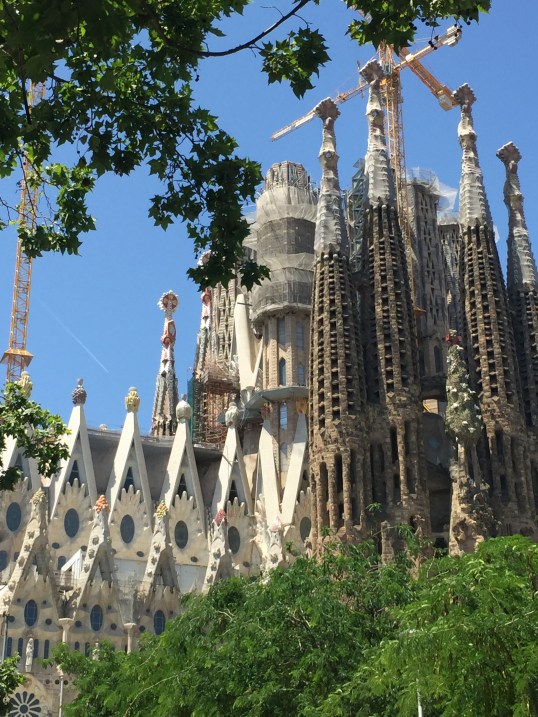
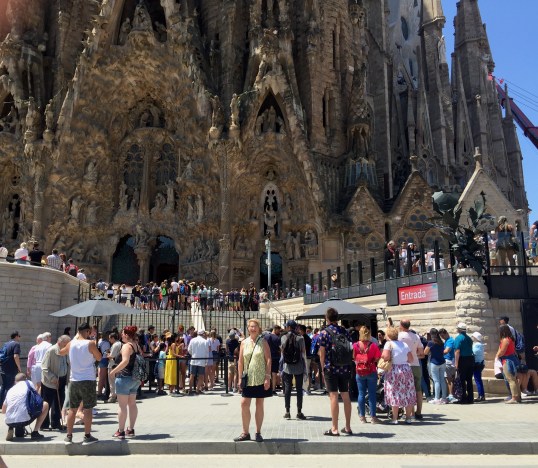
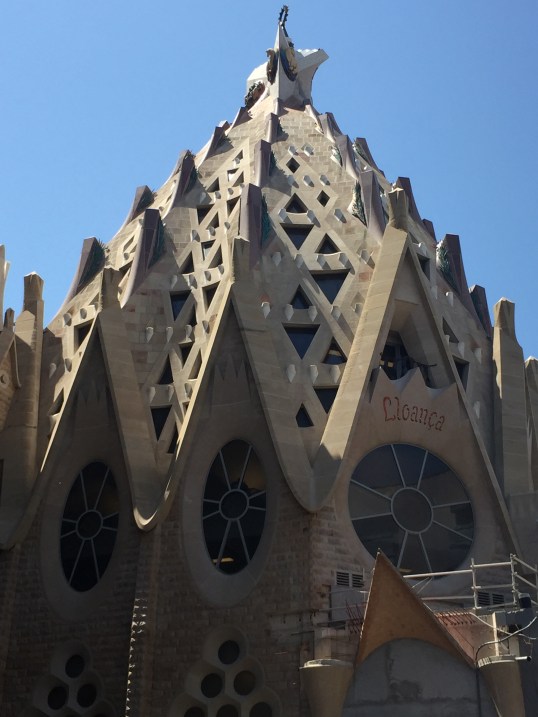
 First stop… Barcelona. From the point of view of many citizens in Barcelona, we are not really beginning our vacation in Spain, but in Catalonia. If you’ve followed international news at all in recent years or even recent days, you know that the Catalonians have been embroiled in a heated battle with the central Spanish government to gain their independence. It is a complicated topic to be sure and despite all I have read, I am not certain which side I would be on if I had to choose. I think you have to be a Catalonian to really understand the motivations and justification for the movement which, both economic and cultural, are deeply rooted in history.
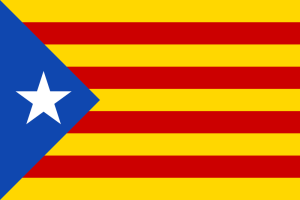
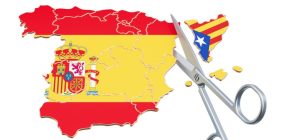 The most recent referendum for Catalonian independence occurred in October 2017. The referendum passed but was flatly denied by the central Spanish government in Madrid who framed it as a coup and charged many of its leaders with rebellion, sedition, and misuse of public funds. Some of those leaders fled the country to avoid arrest. Others remained behind and have been jailed for two years. Just this past week, a trial for 12 of the defendants finally ended and they are awaiting sentencing. This is no rag-tag group. They are highly-educated politicians, professors, economists — experts in Catalonian independence and what it means for its people. In a closing statement Jordi Sánchez, one of the most prominent Catalonian leaders, told the court, “Catalonians are not sheep.” He reminded the judges that two million people came out to vote and they were not manipulated or coerced. Sánchez concluded by saying, “You have the job of not worsening the political situation. I would not like to be in your shoes.” The fate of the accused will not be decided until November. It will be very interesting to see how this situation plays out for the Catalonian people.
 Even though I never made it to Spain, in the early ‘90’s Spain came to me. At the time, I was working as an elementary teacher in a bilingual classroom. This meant I was teaching subjects in Spanish and English to students who were transitioning to English as their second language. I was totally in my element. This educational approach for second language learners is what I had studied, trained for, believed in, and promoted while pursuing my degree at UCR. In California’s Coachella Valley where I taught for 20 years, there were many students in need of this type of instruction but not enough bilingual teachers to serve them so the school district made a recruitment trip to Spain and returned with some spectacular teachers with whom I had the great pleasure of working. In my late 30’s, it was the pinnacle of my career and highlight of my life up to that point.
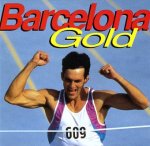 The Spaniards were all from Madrid (madrileños). However, it was during the time we were together that Barcelona gained its first big dose of worldwide recognition in the form of the 1992 Summer Olympic Games and they were extremely proud that their country was hosting this event. They always returned home to Spain for the summer so they were there and I was here vicariously enjoying their company while enthusiastically following the daily Olympic coverage. At the same time, I was savoring the soundtrack of the games aptly titled “Barcelona Gold” which I just recently repurchased to add to the “¡Viva España!” playlist I created for our trip. The opening and closing songs on this album were the most memorable, each sung by an eclectic duo. Freddie Mercury, lead vocalist of the British rock group Queen, teamed up with Spanish soprano Monserrat Caballé to produce the moving Olympic theme song, “Barcelona”. For the closing ceremonies, British soprano Sarah Brightman and Spanish tenor José Carreras performed “Amigos Para Siempre” (Friends for Life) — expressing deep emotions about friendship which seemed to me just as appropriate for the Olympic athletes as my relationship with the Spaniards.
 When I went off to college to major in Spanish at the University of California, Riverside in 1973, I was excited to become a member of the highly touted Department of Spanish and Portuguese. With a student population of only 4,000 at the time, the professors at UCR could provide completely personalized instruction and advisement. They took the time to get to know you and, in turn, you came to known them hanging out at student-inclusive staff parties or being graciously invited into their homes. It was quite a special time. As time went on and budgets deteriorated for the Humanities, changes were made to the department structure. Thus, there was an unpopular, forced merge of many language departments into one large Department of Languages and Literature which we begrudgingly referred to as “Lang & Lit”.
 When majoring in any language, it is generally required that you not only study the language but literature written in that language as well. In this way, you learn much about the cultures associated with it which is equally important. In my case, that involved reading many historically renown novels in Spanish. I surveyed the likes of Don Quijote (Cervantes), Cien Años de Soledad (García Márquez), Bodas de Sangre (Lorca), La Muerte de Artemio Cruz (Fuentes), and many others. However enlightening it might be, literature in any language has never been my thing. So much is left to interpretation and opinion about the meaning behind all the words in these literary masterpieces. Reading this type of work in a second language demands an understanding of its many nuances which is not easy to achieve. I preferred to focus on the less abstract, more concrete side of things… language. The development and structure of Spanish, Portuguese, French, and the Romance languages in general were an endless fascination to me. So I was much more dedicated to my studies in linguistics, a field I had been introduced to at the age of 16 when I attended a National Science Foundation summer program. Even after six years of studying Spanish in junior high and high school, I had never heard of Morphology, Syntax, Semantics, or Phonology — some of the many sub-fields of Linguistics. Once I got a taste, I was completely hooked. In the same way in which literature helps you understand different cultures, linguistics helps you understand languages and the people who speak them. Originally, I considered pursuing a career as a linguist, but decided to choose a more practical application of the knowledge I acquired from this intense study and the ability to speak a second language fluently. It served me well in so many ways throughout my entire 40-year career as a teacher.
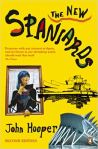 Today I continue to reap rewards from my degree as I travel to other countries. This year we are beginning our journey in Spain, an experience I expected to have when I was back in college until the young, impressionable girl I was then chose to defer an opportunity to study abroad… for a boy — silly me! Though I have visited San Sebastián in the northern Basque Country on two previous occasions, I have always wanted get an overall feel for the whole country. In order to prepare for that experience, I chose to open some more books. This has always been my practice before traveling to a new place. To that end, my reading list includes several non-fiction titles I have been working my way through in the past few months:
 In addition, I enjoy reading a few fiction titles set in the areas we will visit to provide atmosphere along with some historical perspective for our travels. Among others, I was thrilled to discover the novels of
 You might recognize this title as the opening song to the 1968 film, Oliver! It’s sung by the workhouse boys who are fantasizing about all kinds of wonderful food even though all they ever get is gruel. If you know the lyrics or, at least, the tune, you might sing/hum it in your head to accompany this post. We hope you’re hungry for this one!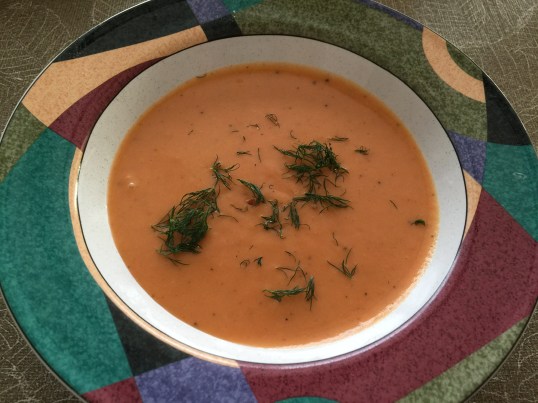









 Paris and Beyond