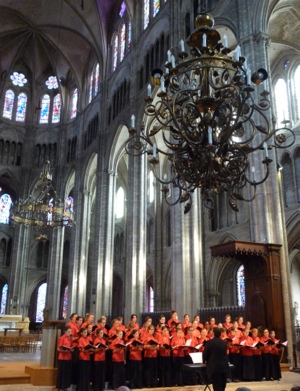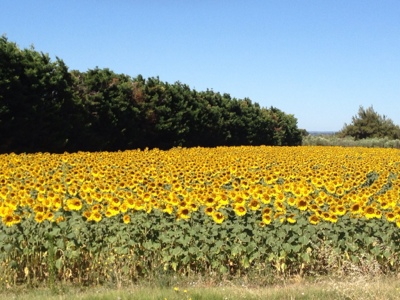
Paris and Beyond

Our Personal Tour de France & Other Exciting Adventures!

Our Nest in Provence

20120813-152249.jpg

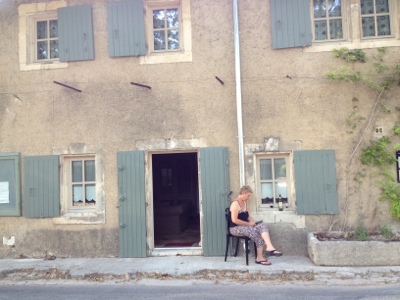
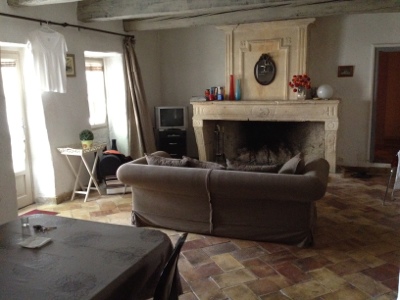
Accommodations: Our first experience with gîte life was in the small village of Le Paradou in the southwestern part of Provence between Avignon and Arles. Our accommodations were actually billed as an apartment but even apartments are included in the gîte category now. The owner Sophie, a real estate agent, greeted us in English with a lengthy, rapid-fire litany of all the places we should visit during our stay. Fortunately, there were piles of pamphlets to back this up and, of course, we had the Internet to guide us in our adventures. Though it served our needs very well, this was the most rustic and cheapest of our accommodations. It was a small but spacious renovated space with separate bedroom and bath that was originally part of a larger 18th century building.

Theme: Most gîtes have some sort of theme to entice visitors. In this case, the idea is that you spend your day touring the area and then return to your “Paradou Nest”, hence the name Le Nid de Paradou.

Pros: a comfortable couch and bed, an adequate kitchen with a full-size fridge, free wifi with strong, fairly fast connection (albeit a very long convoluted password), bargain value ($500/wk — well within our $100/nt budget), and location, location, location — central to all the big name towns in Provence… St. Remy, Avignon, Nimes, Arles, Orange, Aix-en-Provence, Roussillon, and more.

Cons: rather dark interior, traditional small windows with shutters that close you in every night, front door only three feet from the roadway (don’t step out the door without looking both ways), little cross ventilation (we bought a fan which came in handy throughout our trip), stone floors (very typical but hard on the feet and back), a dishwasher where there should have been a clothes washer, and limited built-in storage for kitchen items. Also, we discovered that the French have an affinity for mixing IKEA furnishings with antiques. Aside from the inharmonious decor this creates, IKEA products don’t hold up too well in rentals. They tend to fall apart with repeated use by so many different people. This place had a high ratio of IKEA items.

Community: Le Paradou is a quiet, completely residential community except for one boulangerie (rather average quality) and what Americans would call a mini-mart. However, just a hop, skip, and a jump down the road is another town, Maussane, where you can find absolutely everything you need for your stay. We generally drove a few miles to Saint-Martin-de-Crau for our shopping and the convenience of the unique outdoor laundromat at the Super U. People everywhere need economical options for their day-to-day shopping and the Super U is the place locals go for groceries, sundries, and even clothing. We discovered them all over Provence and definitely found the best deals there. The whole of Provence is occupied by Brits as they love the warm, dry climate. No exception in Le Paradou.

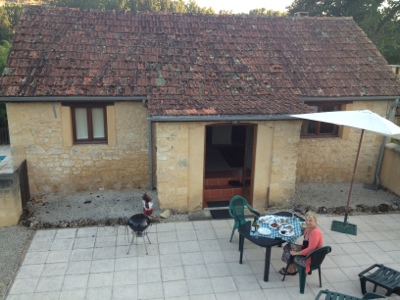
Lessons Learned: We need outdoor living space. This accommodation had none. We knew that when we rented it, but didn’t think too much of it. We didn’t realize how much we are used to this at home — eating or relaxing on our patio. We felt a little cooped up. So one evening we took a couple of chairs outside and sat by our front door with a glass of wine being careful not to get run over by the passing cars. It was such a relief not to be confined to the four walls of our apartment for a little while. We realized that a patio or balcony has to be on our list of priorities the next time we research places to stay.

20120813-152118.jpg

Overall Rating: 👍👍👍 Rustic but fun for a week nevertheless. It served our purposes, but we would not stay here again. There are many other options throughout Provence. Now that I know the area better, with a more advanced search I’m sure I would be able to find something more to our liking. That said, it’s not really going to be an issue because of all the places we visited, Provence was the only one that wasn’t green. Too hot and dry for us.

Link: In case you’re curious… Le Nid de Paradou

The Gîte Life

20120810-123103.jpg

“What is a gîte?” you ask. Well, here’s the story. In France after WW II, people began to leave the countryside and abandon their homes in search of better opportunities in the cities. In order to preserve some of the economy in these rural areas, the government established a program whereby they would provide certain incentives such as money for renovation, advertising, reservation services, and a rating system if people would fix up their homes and other outbuildings and offer them for rent. This idea really caught on and today there are literally thousands of gîtes throughout the country. Many small communities subsist only on tourism trade and several shut down completely during the months of the year when tourists are almost nonexistent. Two of the regions where you will find the most gîtes are Provence and the Dordogne where many of the owners are British. They’re attracted by the warm, dry weather of which they have little in their native England as well as the more affordable price of housing.

A gîte (pronounced “zheet”) is a self-catering accommodation. As such, guests are responsible for maintaining it during the length of their stay. This includes cleaning, making beds, taking out the garbage, and replenishing any supplies that have been provided. Typically gîtes are rented from Saturday to Saturday and guests generally stay from one to two weeks. They vary widely in size, style, and amenities with prices ranging from about $500-1500 per week. It’s really like having your own home away from home while you are on vacation. Gîtes are rated by 1-5 ears of corn called épis based on how much comfort and convenience they provide. There are several reputable sites where you can search for a gîte — two of the more popular are Gîtes de France and Gitelink France.

As we thought about what kind of experience we wanted our vacation to be, this concept really appealed to us. So in February I set out to do the necessary research. Even with a lead of four months, many accommodations were already full. If you are willing to do a little work, you can’t beat the price and convenience of a gîte versus a hotel so they are very popular with travelers from all over the world. In addition, many gîtes cater to larger families or groups. Trying to find one meant to accommodate only two people limits your choices. It presents the same challenge as renting a cabin in a ski area where most offerings will house 8-10 guests.

Aside from saving money on both accommodations and food, the whole point of renting a gîte is to have enough space and facilities to live somewhat like you would at home, or rather, like the residents of that country would live on a daily basis. By necessity, it brings you a lot closer to the people and their culture and helps you learn about the idiosyncrasies of their lives. If you take advantage of the situation the way you should, you need to make a grocery list and go to the local farmer’s market or grocery store and shop for your meals. You have to mix with the locals, read product labels in another language, speak a little of the native tongue, and figure out how to handle the foreign currency. Of course, this means that you need to enjoy cooking for yourself or it won’t seem like a vacation which we do. You will be amazed, even enthralled by the number of culinary choices you have that you won’t find in a restaurant. I think everyone would agree that eating out non-stop for several weeks can get very boring never mind expensive and fattening. If you cook, someone has to do the dishes and clean up, but it’s kind of fun to do that when you’re in a another country. You’d be surprised at how “romantic” it can be. Next you have to figure out where all the garbage and recycling goes. France is big on separating all of these items and depositing them in the proper containers which are sometimes convenient and close by and sometimes not. Occasionally you’ll have to do laundry. Many gîtes have a washer located in the kitchen, but some places have a shared laundry facility or none at all necessitating a trip to the laundromat — another opportunity to mix with the locals and figure things out. At the end of your stay, it’s time to clean house. We both pitched in to do that together and it really didn’t take very long. We do this at home once a week anyway. We usually left the place cleaner than we found it and our hosts were thrilled. Most of them did not charge us cleaning fees or take our security deposits.

20120810-122835.jpg

All of this is more work than many who prefer the conveniences and comforts of home provided by a 5-star hotel are willing to do. But if you are brave enough to jump into your travels from this angle, you will reap the benefits ten-fold compared to the sterile experience you will have at a hotel with a hotel clerk and concierge, both of whom will likely speak English.

We stayed in three very different gîtes during our vacation as well as an apartment in Paris which for all intents and purposes provides basically the same experience. A couple of other excellent resources I used are VRBO and New York Habitat. Stay tuned for details on each of our accommodations. Then you can decide whether or not the gîte life is for you next time you travel abroad.

Fashion Statement

20120809-225825.jpg

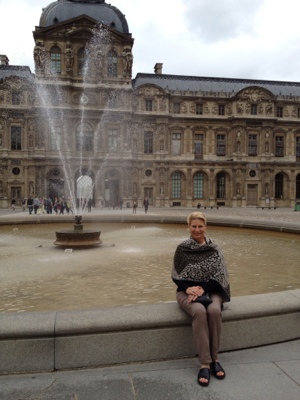
It would be almost impossible to talk about France, especially Paris, without mentioning fashion at least once. Paris has long been associated with the “haute” of haute couture. As everyone knows, the famous fashion houses and their biannual runway events dictate what we will all be shopping for each season. If you are really into having famous label clothing and accessories, you can certainly find them all over Paris. While I admittedly LOVE to shop, I don’t have a budget for this kind of high-end shopping nor do I particularly care about labels. I’m more interested in style.

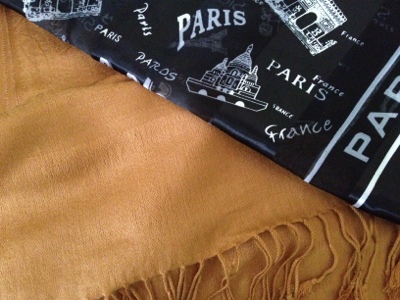
Six years ago when I first visited Paris, I immediately noticed that the majority of the women were wearing scarves. Of course, it was a rainy, cool April so this didn’t seem too unusual. I had started wearing them more often myself since I had recently moved to a cooler climate. It was more about staying warm in cool weather than making a fashion statement though. At the end of this first trip, I realized that scarves served both purposes for French women and men as well. Scarves kept them warm while at the same time adding a lot of style to their ensembles. Everyone seemed to be wearing them and they had this really great way of tying them I couldn’t figure out until I made an observation one evening while waiting for the Metro. I watched a man re-tie his scarf and realized that it was ridiculously easy. By the time the train arrived, I had tied my own scarf in the same manner and was very pleased that I had so subtly picked up a French fashion tip. Scarves are a very common item in souvenir shops, so I bought a couple to add to my collection at home.

Shortly after that, the hobby of knitting had a bit of a resurgence. My grandmother had taught me how to knit when I was very young so it was fairly easy for me to get back into it. Not having much time or patience, however, I quickly discovered that the easiest and perhaps most rewarding thing to knit is a scarf. So I invested in some serious supplies, created quite a few scarves for myself, and made a few as gifts. My focus was still primarily on winter and wearing them in cold weather though. As time went on, I noticed scarves appearing more frequently in stores throughout the year and was attracted by the many varied fabrics and colors. I purchased some and enjoyed wearing them into other seasons.

20120809-230027.jpg

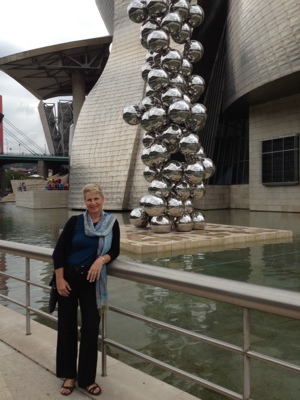
During this year’s trip to Paris, I observed that the scarf scene was pretty much still in full swing. This time I came prepared with my own favorites appropriate for summer weather and my travel wardrobe. I wore them everywhere and, as long as I didn’t say anything, I fit right in with the Parisians. No one was the wiser until I tried to speak French. I kept wearing them throughout our entire journey. While they had plenty of scarves for sale in every region, I began to notice that few French people were actually wearing them. Once you leave Paris, life is much, much more casual especially in the summer. It was interesting to note that when I wore a scarf outside of Paris, it attracted a bit of attention and people were not sure where I was from… particularly as Norman’s French improved. By the time we reached the Basque country in Spain, the Spaniards were sure we were French tourists. The fact that we were also driving a car with French license plates definitely aided our masquerade. It was a lot of fun pretending to be French… if only for a little while.

20120809-230131.jpg

By now I have seriously adopted this trademark of Paris style — the scarf. With help from various online sites, I’ve learned how to wear them in a multitude of ways and identified some great resources for (Oh no! Oh yes!!) buying more scarves. Ironically, they aren’t much different than the ones you find Paris except that you can’t tell people you bought them there. It’s not easy to buy a scarf that’s actually made in France unless you search out specific places and shell out a lot of money. Most of them come from… you guessed it — China. Thanks to the Internet, Americans have the same ability to achieve sophisticated style as the French. Currently, my favorite site is Scarves Dot Net where you can not only find some great scarves at reasonable prices but also video tutorials on 37 ways to tie a scarf. So get your scarf on and follow this very iconic Paris trend.

It’s Complicated!!! Pt. 3

20120802-201733.jpg

Necessities:
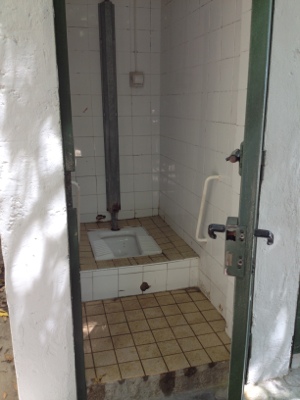
If you have traveled in other parts of the world, you may already know that bathrooms, especially public restrooms, are not all created equal. Norman has already blogged about the difference in the French attitudes about using bathrooms, but there is another part of that issue — the toilet. Much of France has modernized and the toilets you find in houses, hotels, and restaurants for the most part look similar to ours though there are a variety of designs to the flushing mechanisms which you sometimes have to figure out. However, often when you are at a rest stop, public park, or small cafe with limited space, you will run into the old-fashioned European style toilet — basically a hole in the ground with, if you’re lucky, a cement or porcelain floor. They are usually pretty clean, but obviously men designed these with no consideration for women and their more complicated needs. I mean, it’s the 21st century people. Let’s get with the times. When I would encounter this situation, I was usually at an impasse. I didn’t grow up squatting all my life and with no cartilage in my knees, that’s just not happening without a major disaster. I began to observe that French women dealt with this dilemma by searching out the one handicapped stall which would have a normal toilet. So I did the same, but this was not always an option. There’s no requirement in France to provide facilities for the handicapped. The picture you see here shows a rather “deluxe” version of the basic toilet as it has a handle on each side so you can steady yourself. That was uncommon to find. One solution, if you just couldn’t wait like your mother told you to do when you were a kid, was to stop at a cafe and order a coffee so you could use their (hopefully modern) bathroom.

Technology:
Occasionally we needed to make a phone call. We had an international phone with us for this purpose — a complicated little device in itself that we had to practice using before we left home. You can use your cell phone, but you have to pay for a separate plan and it will cost you an arm and a leg. Not very practical so you have to turn off your cellular data so you won’t get charged outrageous fees for calls or text messages. This makes you completely dependent on wifi networks (causing a bit of withdrawal from your 3G) for e-mail, Internet use, and, most important of all, maintaining your Facebook page and Instagram posts. We were happy to find that every one of the places we stayed during our entire trip had wifi to which we could successfully connect. It was on my list of standard options when I searched for accommodations. Of course, not without their complications. In one location, we could only connect one device at a time and we had four — 2 iPhones & 2 iPads. We had to learn to share. At a couple of other locations, the network password was so long and convoluted that the only way you could get it into the password field correctly was to type it in another app like Notes and then copy and paste it. Speaking of wifi, if you are even remotely addicted to your devices like we are, when you are out and about you instinctively check to see if there’s an available network. There are usually many and some of them say “free” which we rapidly learned was a lie — also no such thing as free wifi. It’s only “free” to subscribers of a particular service. On a positive note, something which is actually less complicated when traveling abroad these days is that most newer devices such as phones, computers, travel irons, and blow dryers are dual voltage (to accommodate the European 240 vs. the U.S. 120, which, by the way, is really efficient — too bad we don’t have it) meaning that you no longer need to lug around a cumbersome converter, only plenty of little adapters for the ends of the plugs so they will fit into the foreign wall sockets.

Directions:
Whether you’re driving a car or using public transportation, getting around in a new environment is always challenging for a while. Except for one time, Norman did all the driving on our trip. This is not unusual. You know men, they never really like how their women drive. Besides, I have my own responsibilities as I am usually the navigator. I used to use those old-fashioned maps, but these days I generally depend on Google Maps on my iPad. However, with no 3G availability in France, that wasn’t an option. So we relied heavily on Moneypenny, our friendly and extremely polite GPS navigator. Once we finally learned how to properly direct her, we were pretty successful and she did not lead us astray too often. Only occasionally was she unclear about how far right to “stay right” or tell us to turn against traffic on a one-way street. The problem with this mode of guidance is that you don’t really learn your way around on your own and you probably aren’t carrying a map. One day on a return trip to our gîte near Bordeaux, Moneypenny decided to go on holiday. She just disappeared. Embarrassingly we found ourselves stranded and feeling a little foolish that we couldn’t make the 25 mile trip back to where we had come from. We tried everything we could think of to get her to return with no success, becoming more and more agitated by the minute. Eventually we realized that we had personified her a bit too much. After all, she was just a computer. That made the solution obvious. Restart! So we turned off the car, waited about 5 minutes, and started it up again. Voila! That did it. Whew! She never failed us again which was a good thing because we never did buy a map.

Traffic signals in France are a bit inconspicuous. There are no large looming lights in the middle of the intersection like we are accustomed to. Instead, there is a small light with about 3-inch circles for each color mounted on a pole at the beginning of the lane. It is about the driver’s height and if you happen to be the first one in line waiting at the intersection, it is almost impossible to see. This can cause just a bit of consternation for the driver to say the least. Fortunately, however, French drivers are very patient and we never encountered any road rage. An interesting note — stop signs actually read “Stop” rather than “Arrêt”. Apparently, this is the new EU standard. Funny this didn’t even dawn on me until halfway through the trip. Street signs are another source of frustration. Sometimes they exist and sometimes they don’t, but they are never located on a corner post where they can be easily read from a distance whether driving or walking. They’re always placed up high on the side of a building making it difficult to read them unless you are right in front of them which is usually too late by car. This is where you learn to love those roundabouts. You can go ’round and ’round until you get it right.

When traveling on the Metro in Paris, it is important to plan ahead and figure out what line or lines you will need to use to get to your destination. There are 14 different lines and they are each assigned a specific color on the Metro maps. There is a great app for this called “Paris 2Go” and it doesn’t require a connection so you can use it all over the city. You have to make sure when you board your chosen line that you get on going the right direction. This is fairly easy to figure out if you check on the map for the final destination of that line as the directions are identified by that name. The tricky part is when you get off and you have a choice of 3-5 different exits to the street. They all have designated names, of course, but none of them are ever the names of the street where you know you are supposed to go. So you make a guess and invariably it’s the wrong one. You end up having to cross the street and/or turn around and go the opposite direction. It took us two stays (the first and last week) and multiple tries to finally succeed in correctly exiting at our regular stop en route to our apartment. It was such a joy to finally be able to remember we had to exit at Victor somebody-or-other to land on the main street named Alesia. Of the five exit choices, none of them were labeled Alesia!

Quite often we would stop at the local tourism office when we visited a new location to get area maps and information. The people who work at these offices are multilingual and can communicate with you in English if necessary which is very helpful for directions beyond “gauche” and “droit”. One afternoon I went in to one of these offices to ask for some directions about getting to a gas station that had an attendant so we could pay with Euros. (Our plastic doesn’t work if you recall.) The woman behind the desk started off by saying, “Well, it’s complicated…”. No kidding! In the end, she wasn’t really able to tell me anything I hadn’t already figured out for myself. When I came out of the office, Norman was anxiously waiting for my reply. “Well?” he asked. And I said, “She told me it’s complicated.” We had such a laugh because we had been saying this about so many things for weeks. Even the French agree — life in France can be complicated. While this didn’t solve our problem at the moment, it was somehow reassuring and definitely provided great comic relief.

Despite all these complications, we have to admit that conquering them was part of the fun of the adventure. And next time… Yes, next time, we will be all the wiser.

It’s Complicated!! Pt. 2

The continuing saga…

20120730-185054.jpg

Grocery Shopping:
There are other challenges to contend with in the grocery store. You put the fruit and veggies you want in separate plastic bags just like you do at home. You shop for the rest of the items you need and you take it all up front so you can pay for it. The store is crowded and the checkout lines are long. Finally, it’s your turn. The checker scans all your items until she gets to those fruits and veggies you so painstakingly selected… and hands them back to you. She briefly explains that you have to weigh and price them back in the produce section which she waits for you to do while everyone behind you in line also waits for you. The first time this happens you are under great stress because you don’t even know how to do it. You rush around, somehow figure it out, and jog back to your place in line which has now gotten longer. Amazingly, none of the other customers get very impatient about this, however, and the checker couldn’t care less. Once you’ve had this experience you try to make sure not to have it again. The next time you go to a grocery store, you are prepared and immediately search out the small scale to weigh your items and spit out the required label. Then you discover not every store uses this system! They weigh it for you. So sometimes it’s a guessing game and you can get a bit paranoid about it which is crazy because you’re just buying fruits and vegetables. How to get those groceries home? Well, this one wasn’t too much of a problem for us, but it would be for a lot of tourists. You need to bring your own bags. Since we live in San Jose which just recently enacted a law that you must use your own bags (for everything, not just food), we are accustomed to having to do this. Even so, the first time out you might not have collected any reusable bags yet. I was proud of the fact that I had this one nailed as I brought a really clever nylon bag that squishes into a little pouch. Most of the time I remembered to take it with me when I went shopping, but once in a while I had to purchase un sac.

At “Home”:
As my mother always used to tell me in order to allay my fears about moving all the time when I was young, “Home is where you hang your hat.” I learned to live by this motto so it’s really easy for me to move in to someplace even just for a couple of days and make it home. For five of the seven weeks of our travel we lived in apartments or gîtes for a week at a time. In about a half hour’s time, I could unpack all our things and make it home. We planned ahead and brought a few things that would make this task easier — tablecloth, over-door hooks, iron, and other personal items. We also bought some things that we carried with us from place to place — cocktail napkins, picnic bag, fan, kitchen knives, and Norman’s favorite, the flyswatter. Nevertheless, we still had to deal with some things that we could never really understand or get used to. For example, we both like to use washcloths when we shower. Our hosts always provided towels but only bath and hand towels which, by the way, there was never a place to hang. Washcloths per se don’t exist in France. Occasionally you’ll find something that looks like a washcloth stitched into a mitt, but it’s just not the same. Only once were we given one of these. I had read about this before we left so I packed one for each of us and though it may seem trivial, it made shower time more normal. And sheets — the majority of the time we only had a fitted bottom sheet and a covered duvet — no top sheet or blanket. A couple of places had fancy jacuzzi tubs which the owners were proud to point out, but no matter how hard we tried, we could never figure out how to use them. How could THAT be so complicated?

Windows and doors were another issue. Windows never have window screens, hence, the need for the flyswatter Norman purchased and coveted. And, generally, regardless of the weather — even if it’s warm as it was in Provence, you are required to shut yourselves in every night by closing and locking all the shutters. At first this feels very claustrophobic. Doors and locks, oh, mon dieu
, these are a nightmare. There are no doors with round doorknobs. They all have some type of angled handle that has to be carefully jostled and coaxed into opening or closing the door with the aid of a key. Even our hosts had trouble showing us how to use them smoothly. Norman would usually figure out the trick to them by the end of the week and then we’d move on to a new challenging door and lock at the next stop. I never had much success with any of them so I was totally handicapped in that department. Too complicated! My only photographic regret is that I didn’t take pictures of all the different keys. That would have made a great photo essay. The variety was amazing from a skeleton key to one whose silhouette looked like a castle. I have a feeling there’s no such thing as copying keys in France either.

Our kitchens were variously equipped with eclectic collections of dishes, pots, pans, flatware, and utensils. Norman did a fantastic job of whipping up some of the best meals we’ve ever had despite any culinary items that might have been missing. This saved us a ton of money. I figured out that if you ate out even conservatively for 51 days — a petit dejuner (coffee, tea, juice, pastry — the French never eat a full breakfast) and one other decent meal — it would cost you around $7,000! The one thing that always frustrated him, however, was the lack of lids for pots and pans. He was always having to improvise with a plate or some other flat object and sometimes cooking was just complicated!

To Be Continued…

It’s Complicated! Pt. 1

As we have worked hard to understand the French language and the French and their customs over the past 7 weeks, we have constantly come away with a feeling that many things are complicated. So many simple tasks that we do at home and take for granted require much more effort to accomplish here. Of course, we are at a slight disadvantage due to the fact that our French is very limited and we, well… we aren’t French. Maybe if we had been born and raised here, it wouldn’t seem so complicated. Maybe.

Cases in point…

Store Hours:
Inevitably you arrive in France on a weekend. You crash on Saturday after your long flight and you get up late on Sunday, a little jet-lagged but ready to roll. Too late if you’re planning on getting groceries. Many grocery stores chains are closed on Sundays or only open till noon. In fact, most stores are closed because the French believe retail workers deserve a day of rest. Sunday is often a big shopping day for Americans because they’ve had to work a 6-day week to make ends meet. We are accustomed to everything being open all day on Sunday so it’s difficult to adjust to this in your new environment. This happens repeatedly throughout your vacation because all the places you have scheduled to stay for a week require you to rent Saturday to Saturday generally with no check in sooner that 4 or 5 PM. Convenient for them but not necessarily for us. Eventually we trained ourselves to get groceries en route between destinations with just enough time between purchase and check-in so nothing would spoil.

Automated Machines:
You get to the airport which of course is not really in Paris and you need to get to your apartment in the city about 45 minutes away. No problem. Paris has an outstanding public transportation system. Very convenient… if you are French. The machines which dispense tickets for the train you need to take only accept coins not bills which is all you have if you arranged to get a few Euros ahead of time. There are no change machines anywhere and no airport merchant wants to give you change unless you buy something. Plus, you need a LOT of change. Two tickets cost €18. But wait, the machines take credit cards. We have those. Ah, but we’re not French. So our cards don’t have the special security chip that makes them work in French machines. Eventually you finagle enough Euros in coins out of someone and you’re finally on your way.

This is a recurring story. Parking is rarely free. You are lucky enough to find a parking space and now you have to figure out how to pay for a ticket. There are usually machines located along the street every so many meters. You find a machine, you figure out the directions in French for using it, and then you realize it doesn’t take any kind of coin or paper money — only credit cards. So… You can’t park there.

You’re driving a car so you also need gas. As we have already mentioned, gas or in our case, diesel (known as gazole — I love that word and I plan on using it when I get home and need to fill the tank) is very expensive here. You get excited when you drive past a gas station and find “cheap” gazole, but you quickly learn that you can’t buy it because all the stations that carry cheap gazole are only manned by… you guessed it — automated machines that only take Euorpean credit cards. Many stations that do have an attendant are only manned by a real person who will take your real money during certain hours and definitely not on Sundays. Again we had to figure out how to plan ahead. There were many days when our first daily goal was to buy gazole and then we could breathe a sigh of relief and enjoy the rest of the day.

Even if you’re not driving a car, buying a ticket for the Metro can also be a challenge. The locals who use it daily buy long-term passes that are easily rechargeable (the Navigo — another word I like). These are not practical for the temporary visitor. There are several other options for travelers, but depending on the station you pick to begin your Metro trip, you may find that the ticket machines only accept coins or 🙂 credit cards. Ah, if only we were French! In the end, you learn how to beat this game too. You save your change — you don’t need it for tips anyway as they’re always included in your bill when you eat in a restaurant — and you buy carnets which are packets of 10 tickets so they’ll last you a while. And once in a while you have to resort to buying something small like a pastry at a local shop and handing the clerk a large bill (not popular) in order to get the change you need.

20120730-005928.jpg

Laundry and shopping also present similar dilemmas. If you have an apartment or gîte for a week as we did most of the time, all you have to do is figure out how to use the French washing machine. However, if you have to go out to do your laundry, you will need change… again. You hope you have enough to get through your wash and dry, or you just throw it in the car to dry on the way back to where you are staying. Most grocery stores have the plastic baskets, often rolling ones that you can use. But if you want a shopping cart, you will have to get one in the parking lot where they are all line up and locked together. Hmmm… how to get one loose? You need a coin, or even more challenging, a token to unlock it. And where do you get the token?? We never figured that one out. There was only so much work we had the energy to do. We always managed with the free and easily available baskets. After all, we were on vacation for heaven’s sake and it shouldn’t be so complicated!

To Be Continued…

Looking into the Mirror

20120730-004533.jpg

Seven weeks, 51 days, many, many cities, towns and villages, more than 4,700 kilometers traveled! What an experience! It is said that the value of travel is that you learn more about yourself when you are out of your own country than when you are in it. The first experience that I had with that phenomena was when I lived in Japan for a year when I was a graduate student. When you are away from your own culture, you become more aware of the customs, attitudes, and language that form and shape you. Granted seven weeks is really too short a time to expect to experience this but it does provide enough time for you to reflect on your own customs and culture.

What you notice more at the beginning are the obvious things that shock you. Things that are very different from your own customs. As time goes on, you begin to notice more subtle differences. And eventually, if you allow yourself to become aware, you begin to understand more complex differences such as in politics, attitudes and the various meanings in language. I suppose that the reason one becomes aware of one’s self is because of the natural tendency to make comparisons between your culture and the other.

Here are some examples. In the U.S. we tend to be rather direct and blunt with each other. We have less of a tendency to say “hello”, “excuse me”, “thank you”, and “good bye”. Public displays of crudeness, vulgarity and selfishness seem to be more freely expressed. Here, while the aforementioned can occur, it stands out because of its rarity. There is a concerted effort to adhere to polite, civil behavior. It is part of the national psyche. The benefit is obvious and this behavior is demonstrated everywhere. From everyday contact on a person to person basis, or while driving in a large crowded city like Paris or on the very narrow roads in rural villages to being in very compressed rush hour commutes on the metros. On the contrary, we tend to be short on patience, easily upset, and quick to react to any situation that disrupts our course or routine. While Americans have a reputation as easy going and quick to make friends, the French are reserved, formal and much more likely to take a long time to befriend others. In an earlier blog, I mentioned that most French homes faced inwardly so that the front of the home facing the street seemed to be the back. And that the nicest part, the courtyard, was never exposed to the street. This attitude goes back centuries when it was necessary to close yourself off from the street and lock yourself within the walls of your abode to protect yourself from any threat, real or perceived.

Historically, France was a land of many different cultures and languages. It wasn’t until a long series of battles for power and territory by various individuals or groups that the country was finally unified. Unlike Italy, France doesn’t have major cities or monuments throughout the country. Presently nearly 20% of the population lives in or around Paris which, apart from Moscow in Russia, is the largest city in Europe. The rest of the country is made up of smaller cities, towns, and villages. In order for everyone else to distinguish themselves from Paris, many regions throughout France produce regional specialties, mostly in gastronomy. This has created an incredible variety of products of the highest quality. Take cheese for example. Charles de Gaulle has been credited as saying “How can anyone govern a nation that has two hundred and forty-six different kinds of cheese?” Today by the way, that number is over 400 different types. I couldn’t even begin to tell you how many wineries there are throughout the country. The one thing I can say for sure is that the French (as well as the government) are concerned about quality. There are rules, regulations, and laws that govern and assure the quality of countless French products. While we (Americans) might feel that the government is excessively intruding in our private affairs, the French welcome their government’s direct involvement and see it as its role in preserving all that is French.

Cheryl and I have begun to learn to accept things that we would otherwise dismiss as being too intrusive, dumb or “backward”. It is always easier to frown and react negatively to something than it is to make the effort to smile and try to understand that that is different from you. This doesn’t mean that one has to accept EVERYTHING unconditionally of another culture’s customs. Here is an example, a rather intimate one. It seems that the French (and I have to say other European countries as well) have attitudes about “personal habits” that are completely contrary to ours. In the U.S., in many states, it is a crime for men (or woman for that matter) to relieve themselves in public. Yes, you heard me right. In 1990, I had the opportunity to come to Europe and travel throughout Italy, France, and Spain. While in France, I came across many places mostly in towns and villages outside of Paris where men could relieve themselves in public urinals that were essentially small curved walls on public streets. While I didn’t notice those types of publicly exposed urinals this time around, I constantly saw men, of all types and ages relieving themselves in public against any available wall that seemed slightly obscured from the public. Maybe I am even being too generous with the slightly obscured part. While in Biarritz, a very chic resort town on the south west coast of the French Basque country, to my dismay I witnessed a man in his thirties pushing an infant in a stroller, stop not more than twenty feet from a fancy store front where there were half a dozen ladies outside having a lively conversation, walk over to a barely obscured wall on the building next door, and relive himself! What did the ladies do, how did they react? Surely they could plainly see him if I could, and I was more than twice as far away and across the street! No reaction, none, nothing, nada. Life went on as usual. It reminded me of a college course I had in cultural anthropology many, many years ago where our professor set up the following situation and asked the following question. “In a remote African village located on a flat desert plain with no trees, brush, or rocks to hide behind, a man needed to relive himself. What did the villagers do?” Well, to our young unsophisticated minds that was quite a puzzle. Let’s see, the villagers brought out animal hides and surrounded the man to shield him from the rest of the people. Or, the man was required to walk so far away form the village that he couldn’t be seen. How about, all the villagers left the village and came back when he was done? No, the answer was elegantly simple. They simply averted their eyes. We came across this very example when we stopped in at a beautiful riverside village on our canoeing trip down the Dordogne river to use the facilities. The “facilities” consisted of a small building that had its double doors wide open. To the left were two separate doors where the toilets were. On the right with nothing to obscure it from public view was a wall where the men could relieve themselves. The ladies that needed to use the toilets, lined up facing forward not more than ten feet from where the men were relieving themselves. What does this attitude say about our own morals and customs? That, I will leave up to you.

On a more positive note, I have to mention how wonderful it is to have everyone greet you, no matter how brief the contact is. Yes, people are people everywhere. And they can have problems or issues that they are dealing with. And yes, occasionally you might come across someone that is not having a good day. But generally and far more often than not, courtesy and civility reign. It is something that we in the U.S. (much more so on the west coast it seems) could benefit positively from if we only practiced it more
20120730-004936.jpg

Today Cheryl asked me the following question: “Out of everything, everything we have experienced these past seven weeks, what is your most favorite thing about France?”
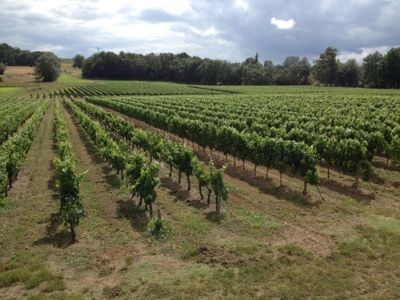
It took me a while to answer that. What I really truly enjoyed most about our experience here I have to say, is the country. By that I really mean the “country”. What struck me time and time again as we traveled from region to region, was how beautiful this country is. Every time I thought I had seen the most beautiful part of the country, the next place was just as beautiful but in its own unique way. I can understand now why the French are so proud of their country and why they make every effort to preserve it. Even though change is inevitable in this modern age, France is slow to adapt to change, especially when it comes to culture. And preserving and conserving the countryside IS part of the culture. I think the various regions in France will probably stay unchanged for some time to come.

Thinking back on my own country, it makes me appreciate how vast and diverse it is with so many beautiful and magnificent places, along with the incredible diversity of people and cultures that defines us.

Tomorrow we leave for home. I have often thought what it would be like to live outside my native country. I did it for a year after all. But the more I look away to other countries, the more I look back at my own. And so, standing in front of the cultural mirror of self reflection, I have to say…..no, not now. I realize what I have back home. Family, friends and a rich culture that while not perfect (and whose is), can never be replaced.
Hot! Hot! Hot!

20120728-201752.jpg

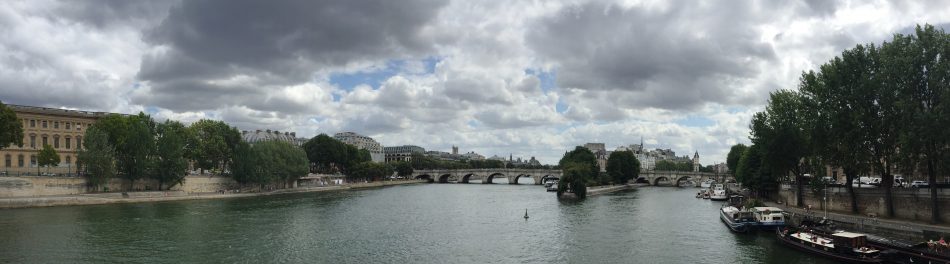
Returning to Paris this week, we found a very different city than the one we left 6 weeks ago. It was raining and cold the first week of our vacation and we wondered if we would ever see the sun here. Of course, we knew better than to complain. At least we weren’t hot and uncomfortable… until now. Though it only rose to the high 80’s for the last few days, which seems like nothing when compared to the 100+ degree temperatures we experienced for so many years living in the desert, it was HOT and (worse) humid. Nevertheless, we did our best to enjoy the last items on our vacation “to do” list.

MONDAY we arrived back at our same apartment in the Montparnasse neighborhood, checked in with the owner, left our luggage, and then made our way back to the airport to turn in our car. It was our last GPS challenge of the trip. It was a huge benefit to have a car for 5 weeks and really get to know many parts of France in a way that we would not have otherwise been able to do. The only thing we really missed about having a car this week was the air conditioning which we hardly used as the weather was cool and pleasant everywhere else.

TUESDAY we made a rather long but worthwhile trip out to the Musée Marmottan which houses the largest collection of Monet paintings in the world including Sunrise, his first painting done in the Impressionist style. It was thrilling to have the opportunity to see so much of his work at one time. While there, we also discovered a huge body of work by Berthe Morisot, a woman from the same era as Monet whose mother signed her up for some art classes simply for the purpose of painting a gift for her father’s birthday and ended up making it her career. She hung out with all the bigwig Impressionists of the time and married Edouard Manet’s brother keeping it all in the family. Her work was outstanding as well. This is a museum not to be missed if you are a fan of the Impressionists like we are.

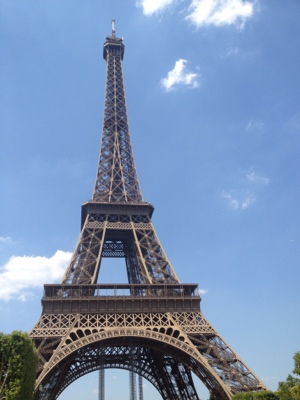
WEDNESDAY we went on a special tour — “Behind the Scenes of the Eiffel Tower”. Since we had been to the top of the tower on a previous trip, we wanted to do something different and avoid the crowds at the same time. Our guide informed us of many interesting details about Gustave Eiffel and the financing and building of the monument which was constructed for the 1900 World’s Fair. Like many entrepreneurs who pursue grandiose ideas, he was very successful but died penniless due to constantly having to support his marvelous endeavor with his own money. We began with a tour of the underground bunker located just beyond the tower that was originally used to conduct and monitor telegraph communications and later as a military bunker twice occupied by Charles de Gaulle in times of emergency. It now serves as a galley and service area for the employees of the tower. Then we went below the base of the tower itself to see the workings of the elevator lifts. Finally, we ascended to the second level where we climbed a few more stairs to the roof of the restaurant for our own private view. Right now the tower is functioning with only one of its two elevators making the wait in line to get to the top longer than ever especially in summer months. Some people had waited 3 hours in the hot sun with very small children just to get to the entrance for the elevator. We thought this was kind of crazy as simply planning ahead would have avoided this basically painful experience. Our tour ticket permitted us to bypass these lines and go directly up with our guide. Something new is always brewing at the tower. Currently, they are installing a glass floor on the first level so you can look down at the emptiness below. Actually, you will be looking at a lot of people who are looking at you. No dresses for the ladies please. When it was time to descend, we decided to bypass the elevator lines and walk down… that’s 720 steps from the second level to the bottom!

20120729-000742.jpg

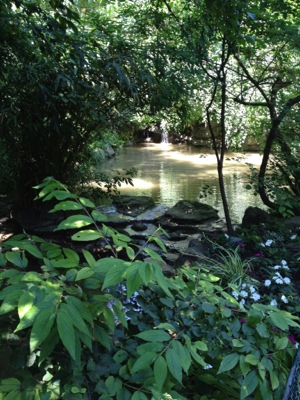
THURSDAY we sought out one of many hidden gardens of Paris. Thanks largely to former president Jacques Chirac who served as mayor of Paris for 18 years, there are over 400 gardens, parks, squares, and woods. He endeavored to make this his legacy to the city especially turning small hidden, out-of-the-way places into green havens of peace and tranquility. We explored the Vallee Suisse garden near the Palais Decouverté — smaller than we expected but definitely a great escape for Parisians who need a brief respite from the city sights and sounds. From there we walked to the Tuilieres Gardens to visit the Musée Orangerie, another museum mainly dedicated to Monet. In fact, he designed the space specifically for the work there on display. The museum consists of two large oval galleries each featuring four extremely large canvases titled Water Lilies that Monet painted of his gardens in Giverny from different perspectives. Each one is unique, some appealing more to one viewer than another. We found our personal favorites and savored them for a time.

By FRIDAY we had had enough of feeling hot and sticky so I knew it was time to enact the same strategy we always used on those super hot, humid days in the desert when the evaporative cooler in our house was not going to keep us comfortable… Head to the nearest air-conditioned mall to hang out and then catch a movie until it gets dark outside. Skeptical that we would be able to pull this off with the same level of satisfaction as we did in the U.S., we nevertheless set off for the most modern part of Paris known as La Defense where there is a 4-story shopping mall and cineplex. The source of our skepticism is the fact that the French have never stepped up to employing air conditioning as a way of making life more bearable during the hotter times of the year. Every other European country is much more on par with the U.S. on this topic and it’s unclear why the French have not accepted this technology as progress. They seem to prefer to sweat. Perhaps air conditioning seems excessive since they mostly only need it in July and August or maybe they fear it will somehow make them less French if they adopt one more universal habit. Who knows? But what we do know is that we had experienced very little cool air anywhere we went, be it department store, restaurant, or, heaven forbid, the Metro. So we thought we’d gamble that one of the more recently built structures would have unquestionably installed air conditioning. When we arrived, we did notice a slight improvement in the ambient temperature inside the mall but nothing like we are accustomed to at home. We sat for a while at a sushi boat-type restaurant (run by Chinese) and had a couple of cold beers and some snacks finding some relief from the heat and heavy French food. Afterwards, we purchased tickets at the cinema to see The Dark Knight Rises “VO” — very important! This stands for “original version” meaning it’s in English. We were craving that. Ah, three hours of English in a comfortable seat and a cool theatre. You know how you sometimes have to take a sweater to the movies in the summer? Well, don’t worry about that here. It was about the same temp in the theatre as the mall — only slightly cooler than outside. Norman swore the cement floor was even somehow being heated as he feet were getting hot. Fortunately, we were sufficiently entertained by the movie to forget about it all for a while and, at some point, I almost felt like we had teleported home. Once enmeshed in the darkness of the theatre, watching a movie in another country is no different than at home as long as it’s in English though I did notice that the French, who were forced to rely on subtitles, didn’t always get the jokes like we did. It was nice to have the upper hand for once.

With Paris clearing out as almost everyone goes on vacation for a month, it seems an appropriate time for us to head back home to our own little chateau the Silicon Valley which we are certain to enjoy with a new level of appreciation. After all, that’s what vacation is for.

Look, Listen, & Learn

20120728-190102.jpg

Well, after seven weeks of traveling throughout France, we have fulfilled a long sought dream. To visit and learn about most of the major regions in this amazing country and to experience it not as tourists, but as pseudo incognito French. Our goal was not to pretend to be French but instead to blend in as much as we could and visit sites and locations that were out of the way from heavily touristed areas.

The one thing that I must say about our adventure is that, wherever we went, we were mostly with French people and even though my French language skills are minimal, we were always treated with courtesy and respect. Not once were we dismissed or rudely treated. We were always met with a greeting. Our questions were always answered with patience and understanding. All it took to get someone to try to help us was an effort on our part to say in French a few simple sentences that let them know that our French was limited. Even if they couldn’t speak English, they made an effort to help you anyway.

One of the benefits of being in a country for such a long time is that in the native language, you start to hear what you weren’t able to before. Words that were difficult to understand suddenly form into sentences and while you might not be able to respond in the way that you would like to, you begin to understand what is being said.

One of the interesting things that we learned about the language was that like many other countries’ languages, there are variations and accents. The further we traveled south, the more regional the language became. In some places like Perigord, we heard Oc which is an ancient regional language still spoken there. In the Basque region, we heard Basque, a unique language with no ties to any other language. In Paris, we were delighted to listen to the beautiful soft sing-song lilt of a young lady helping us at a boulangerie and the difference between the Parisians saying “oui” (wee) and southerners saying “ouie” (way) for “yes”.

Although I have studied French on and off for longer than I care to admit, French is still very challenging. Some of the difficulty is due to the grammar but most of the difficultly is in the pronunciation. The nasal “r” is the most difficult sound of all. It is somewhere between the Spanish “r” and pronouncing the Spanish “r” while pinching your nose closed therefore creating the “r” sound from the back of your throat and your sinuses. Another challenge is to understand that many words that are spelled very differently have the same pronunciation. In English it is the equivalent to pronouncing “C”, “see”, “sea”.

After seven short weeks of speaking and listening to French on a daily basis, I certainly have improved my language skills considerably. You can learn a language better when you are totally immersed in it. It does take an effort, however. At times it is tiring, and I long to take a break from it.

20120728-190310.jpg

This afternoon Cheryl and I went to Saint-Germain-des-Pres in central Paris because she wanted to go shopping. If you aren’t familiar with this area of Paris, it is well known for its exclusive shops and many restaurants and cafes including the most famous one, Les Deux Margots, where many artists and writers of the past spent much of their time. This is our last weekend in France and just a few days before August. Paris is beginning to empty out (as the entire country goes on vacation in August). Those Parisians that are left are either preparing to leave or cannot go on vacation. In some instances, the service you get when you are out can be affected by this fact. Since we didn’t have breakfast we decided to drop into a cafe and get a pastry and something to drink. After waiting for quite a while to be waited on, I ran into a syndrome that I call the “you’re not here and neither am I” syndrome. This is manifested when you have a waiter/waitress that isn’t listening to you and whose mind is elsewhere on vacation. Wanting to order a pastry it took several attempts to get the waitress to focus enough in order to get the items that I wanted. Before I got the chance to put in my order, a young Frenchman next to me was having the same trouble. He had to repeat himself several times in order make himself understood. And he spoke perfect French! The waitress I had even admitted to me that she was distracted because she was thinking about her vacation. It seems that our timing to return home will work out just fine since we will have enjoyed the best time to have toured France.

Pleasant Surprises

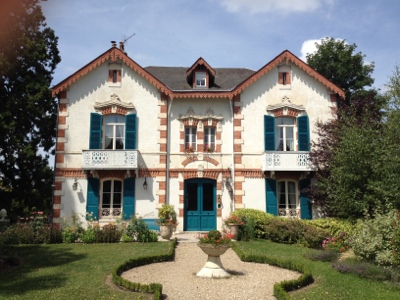
Some of the best travel experiences are the unplanned ones. Such was the case with our stopover in Bourges between the Dordogne and our return to Paris. You won’t find Bourges in any popular travel guidebook for France, but I found what seemed like a gem of a B & B there for such a great price that I booked two nights. When we arrived, I knew immediately that I’d made the right choice as far as accommodations were concerned. Once we settled in, we were able to enjoy our picnic lunch on the terrace under the shade of a huge redwood surrounded by gardens filled with every kind of plant and flower immaginable. This is also where we had our petit dejuner each morning. In addition, there is an immaculately decorated parlor available to the guests where we spent some time the next day writing and painting while enjoying a cup of tea.

20120725-231006.jpg

Oustal en Berry is a 19th century guest house run by a couple and their adorable Westie, Elliot. It consists of four guest rooms all named after famous French women. We stayed in the Colette room. She was an author who wrote many books, the most well-known to Americans is Gigi. Colette is actually credited with discovering Audrey Hepburn whom she personally chose to play the role of Gigi in the original Broadway play. However, most people my age will better remember the movie version starring Maurice Chevalier, Louis Jordan, and Leslie Caron. The plot is that of a young girl being trained as a courtesan which was a very controversial topic to American censors in 1958 so the producers were forced to turn it in to a musical. Ah, the good old days of innocent movies. The house itself is truly a work of art and we were pleased to have the opportunity to share and admire it for a couple of days.

20120725-232337.jpg

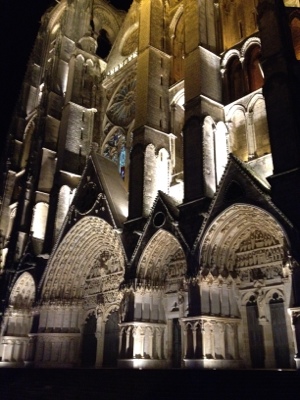
On to the surprises… We really had no sightseeing expectations for this city. The first evening of our stay we were told there was a special light show we should see. So after a bit of a rest, we set off for some dinner and the recommended walk through the old part of town (always the most interesting in every place you visit) to see the lights. Since it gets dark so late in France this time of year, we had to wait until at least 10 PM. Bourges has some intriguing architecture. One is the 19th century style that you can see in the B & B — bricks used to create an alternating striped design around the edges of the building and its windows. Another style common in the old town area is half-timbered houses. They remind me of something you might see in an alpine village. The third is Gothic which was the focus of the walking tour of lights. For a couple of hours on certain evenings during the summer, the most distinctive examples of this architecture are lit up with lights as well as projections of images related to the building or the period during which it was constructed. There are little blue lights that mark the pathway from place to place which you are supposed to follow, though, believe it or not, we found this a little challenging like everything else in France. Eventually we got on the right track so to speak. It was pretty impressive and made us realize there was more than meets the eye in Bourges.

20120725-231130.jpg

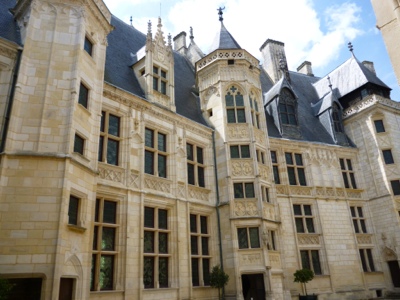
The following day we were able to dedicate our “day off” from travel to visiting the interiors of two of the most extraordinary examples of Gothic architecture we have ever seen. The first was the Palais de Jacques Coeur, a financier in charge of trade and acquisitions for King Charles VII. As a shrewd businessman and with the king’s support, Jacques became very wealthy and decided to build himself a mansion in grand style sparing no expense. It is an enormous structure — one of the few examples of urban Gothic architecture that exists. We were allowed to tour many of its rooms freely on our own and it was a lot of fun to imagine what life must have been like. Jacques didn’t leave out a thing in the way of comforts. He even had indoor latrines and a sauna. Unfortunately, his glory days only lasted about 10 years before he was arrested for a number of crimes including poisoning the King’s mistress, coining light money, and fraud. Apparently these sorts of chenanigans have been going on for centuries. Those who were in debt to Jacques and had gotten fed up with his greedy ways showed no mercy and he was sentenced to death. Saved by a friendly Pope, he was given command of a crusade against the Turks during which he fell ill and died. Nevertheless, he remained a legendary figure in the history of France as he had successfully established direct trade between France and the Middle East for the very first time.

20120725-232150.jpg

After this we moved on to (yes, another) cathedral. We really thought we would have seen enough of these by now, but we kept stumbling across the “the best example of this” and “the largest one of that” and we just couldn’t ignore the gigantic, imposing Cathédrale de Saint-Étienne. One of the things that makes this church unique is that it was designed without a transept which is the section of the building that sits crosswise and forms the typical cross design of most ancient churches. This was revolutionary for its time. What is most impressive, however, is the myriad of Gothic flourishes and details including a variety of intriguing and amusing gargoyles that you see everywhere you look. While we were visiting we happened upon a concert put on by a girls’ choir from St. Jean, a church we had seen in Lyon. It was delightful to hear their voices resonate within the incredible acoustics of the cathedral. I stayed to listen to the concert and Norman decided to take in a tour of another part of the cathedral. Over an hour later after the concert had concluded, I was still waiting for him. I thought he had gone to climb the 396 stairs of the North tower and I panicked when I saw a young woman take out a large iron key and lock the tower door. She assured me that no one was in the tower, but, really, what did she know? I mean, did she really check?? I started to think about how I would have to muster my French skills and courage to rescue my husband. Finally, I decided to walk outside the church and, low and behold, there he was on his way in. I had misunderstood his intentions and he had actually gone on a tour of the crypt which had just ended. Whew!! French emergency averted!

You never know what you are going to find in your travels. It’s important to keep an open mind. We were really happy to have discovered the belles of Bourges.

Post Navigation